
Soviet Drum Machines and Percussion Synthesizers
A practical history of the Formanta UDS, Lel UDS, Marsh and Elsita families—and why many instruments called “drum machines” are better understood as playable, trigger-driven synthesizers.
Hear the Lel UDS and Formanta circuits in a plugin: Tapechild UDS-1601 / Working definition
What were Soviet drum synthesizers?
Soviet electronic percussion covered more than one format. Some systems paired pads with a rack or tabletop sound module. Others were presented in ways that resemble an early drum machine. Their shared idea was direct: transform a short trigger pulse into a shaped electronic sound.
That distinction matters. A conventional drum machine is usually expected to remember and play a rhythm. A triggered percussion synthesizer may have no pattern memory at all. It waits for a pad, sequencer or external trigger, then generates a voice from oscillation, noise, envelopes and filters. Collectors, sellers and musicians often use “drum machine” as the broad category; the circuitry can tell a more precise story.
Names, spellings and system configurations also vary across surviving manuals, museum listings and sale archives. “Marsh” may appear as “March,” while a model name can refer to a module, a pad set or a complete kit. This guide keeps those uncertainties visible instead of forcing every surviving unit into one fixed specification.

02 / The important split
Drum machine or triggered percussion synth?
Drum machine
The rhythm lives inside the instrument.
A sequencer, memory or pattern system determines when the voices play. Synthesis or samples may provide the sound, but programmed time is central.
Triggered percussion synth
The performance arrives from outside.
A pad strike or trigger pulse starts an analog voice. The module shapes the hit; the player, external sequencer or recording system supplies the rhythm.
The boundary is practical, not absolute. A complete setup can combine a trigger-driven module with an external sequencer and behave like a drum machine in use.
03 / Formanta UDS
Formanta UDS: a playable system, not just a preset box
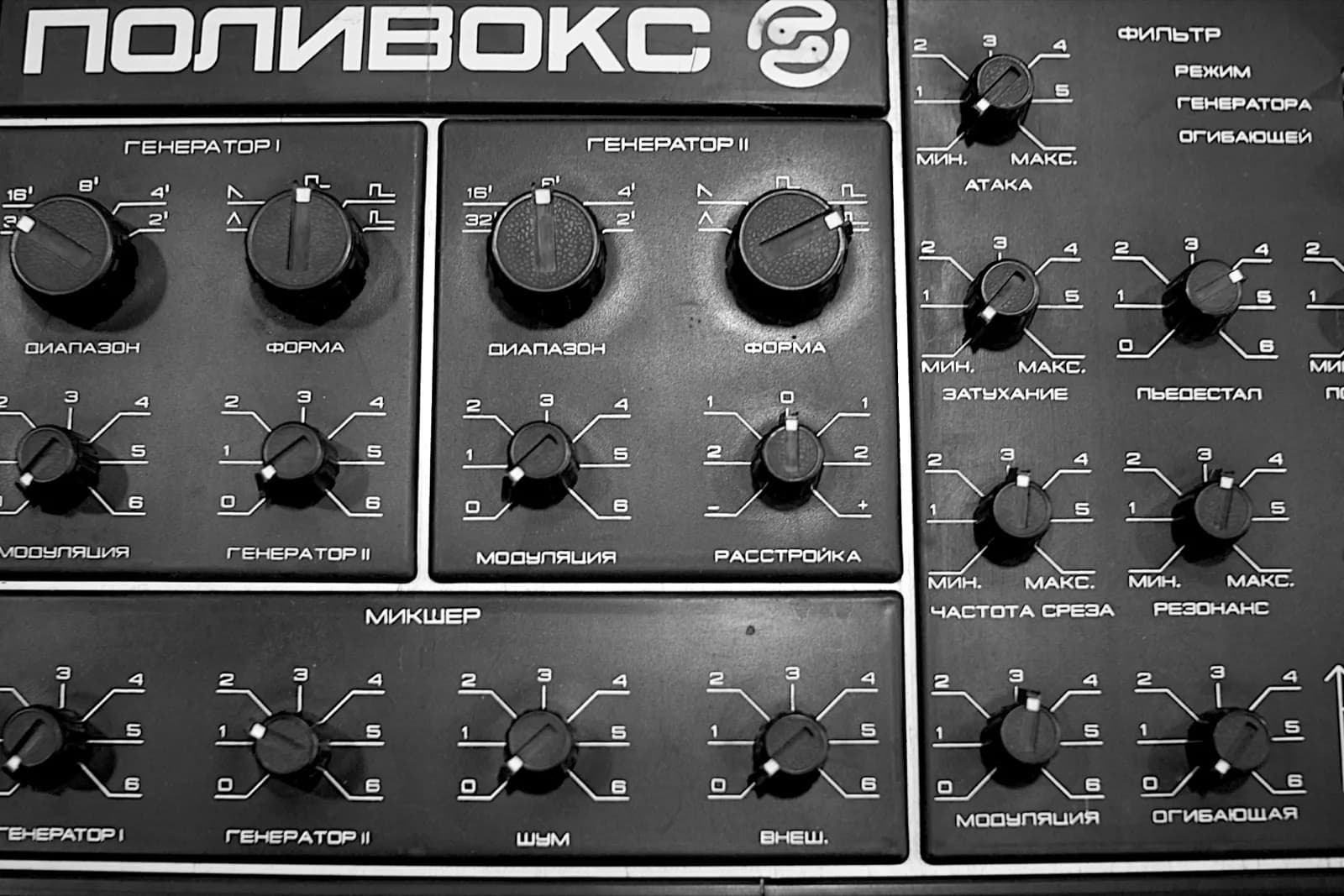
Surviving Formanta UDS documentation and collector accounts describe an electronic percussion system organized around several channels, with pads or external pulses used to trigger the sounds. The editable voices are commonly described as analog, while dedicated cymbal or hi-hat functions may sit beside them. Exact controls and channel assignments should be checked against the manual for the specific unit.
What makes the Formanta idea important is the amount of synthesis exposed to the player. Pitch, decay, noise and other voice parameters move the instrument away from a fixed imitation of an acoustic kit. A tom can become a descending electronic zap; a short noise voice can become a dry snare; longer settings can produce effects that no acoustic drum is expected to make.
This is the recurring Soviet UDS proposition: the panel is not merely a mixer for drum presets. It is an invitation to build percussion from a small set of signal sources and contours.
.jpg)
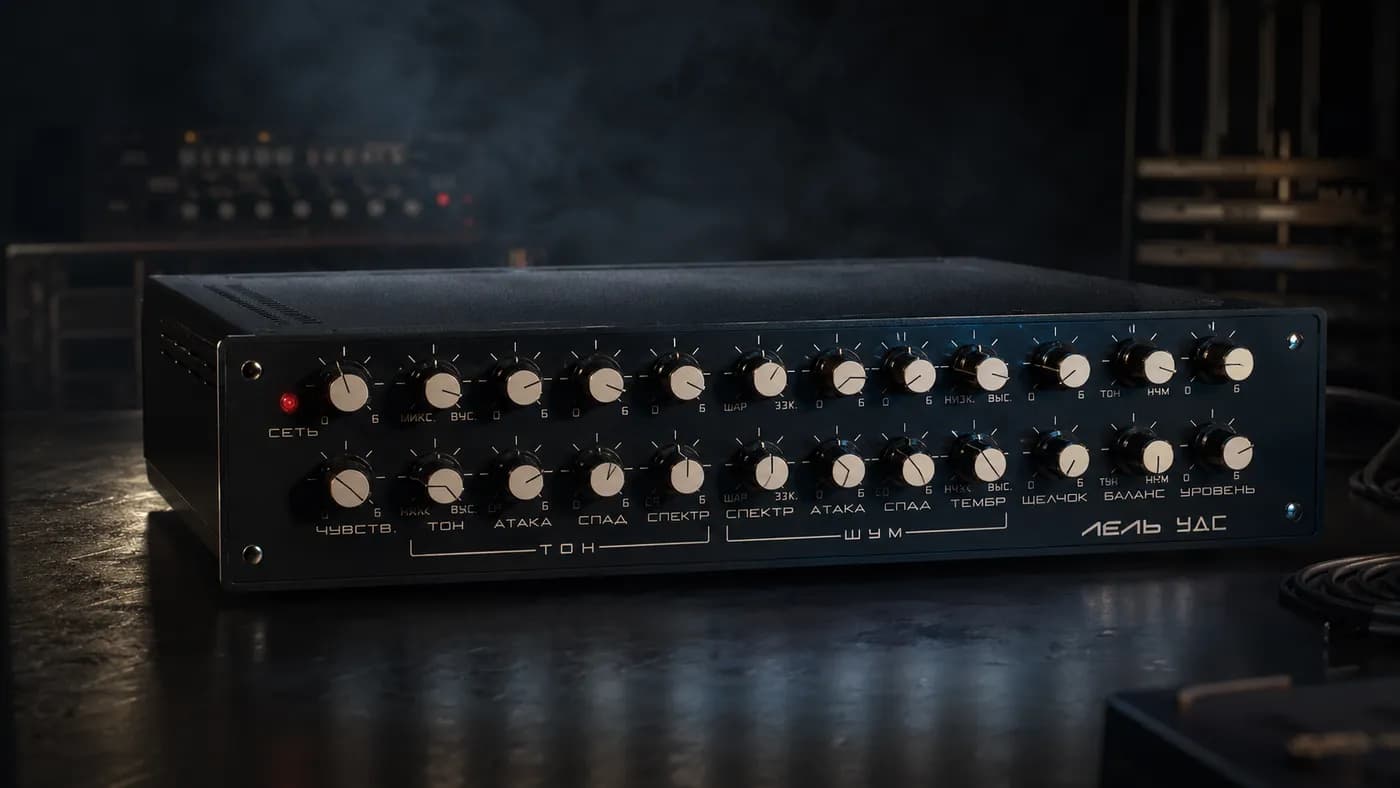
Tapechild product visualization · not an archival photograph
04 / Lel UDS
Lel UDS: two channels, many possible drums
The Lel UDS is best approached as a compact, two-channel percussion synthesizer. Surviving panel photographs, schematics and sale descriptions point to two independently triggered channels. Each hit is assembled from controllable tone and noise behavior rather than replayed from a recorded sample.
Controls and architecture
The visible control groups suggest a voice built from pitched tone and noise sections, each with its own contouring, followed by timbral shaping, click, balance and output level. Labels and ranges can differ across references, so the signal-flow idea is more dependable than a universal knob-for-knob specification.
Tone, noise and click
Tone supplies the resonant body. Noise supplies the unstable, broadband material needed for snares and rough attacks. Click adds a brief front edge. Their balance can move from rounded electronic toms to terse, mechanical hits without asking one oscillator to do everything.
Pads and external triggering
A trigger input turns voltage into articulation. With pads, the module behaves like an electronic drum kit voice. With a sequencer or other pulse source, it becomes part of a programmed setup. Input sensitivity matters because trigger shape and level can affect reliable firing.
How the Lel UDS sounded
Its architecture points toward compact, synthetic transients: pitched knocks, decaying tom-like bodies, noise-rich snaps and clicks that cut through a mix. Individual vintage units can diverge because component tolerance, calibration, repairs and recording chain all change the result.
05 / Voice anatomy
A drum sound built as a signal path
A pad strike or electrical pulse starts the voice.
A pitched oscillator provides the body and the falling-drum contour.
Filtered noise supplies grit, snap and diffuse high-frequency energy.
A short transient sharpens the front edge of the hit.
Attack, decay, spectrum and balance turn the raw sources into percussion.
This modular way of thinking is the foundation of drum synthesis: a kick, snare or metallic hit is not a fixed file but a relationship between excitation, resonance and time.
06 / Wider family
Marsh UDS, Elsita and the wider field
Marsh / March UDS
Museum and collector indexes place the Marsh or March UDS among Soviet electronic percussion instruments. Sparse surviving material and variable transliteration make it unwise to collapse every listing into one detailed specification. Treat the name as a research trail that requires a unit-specific manual or panel check.
Elsita
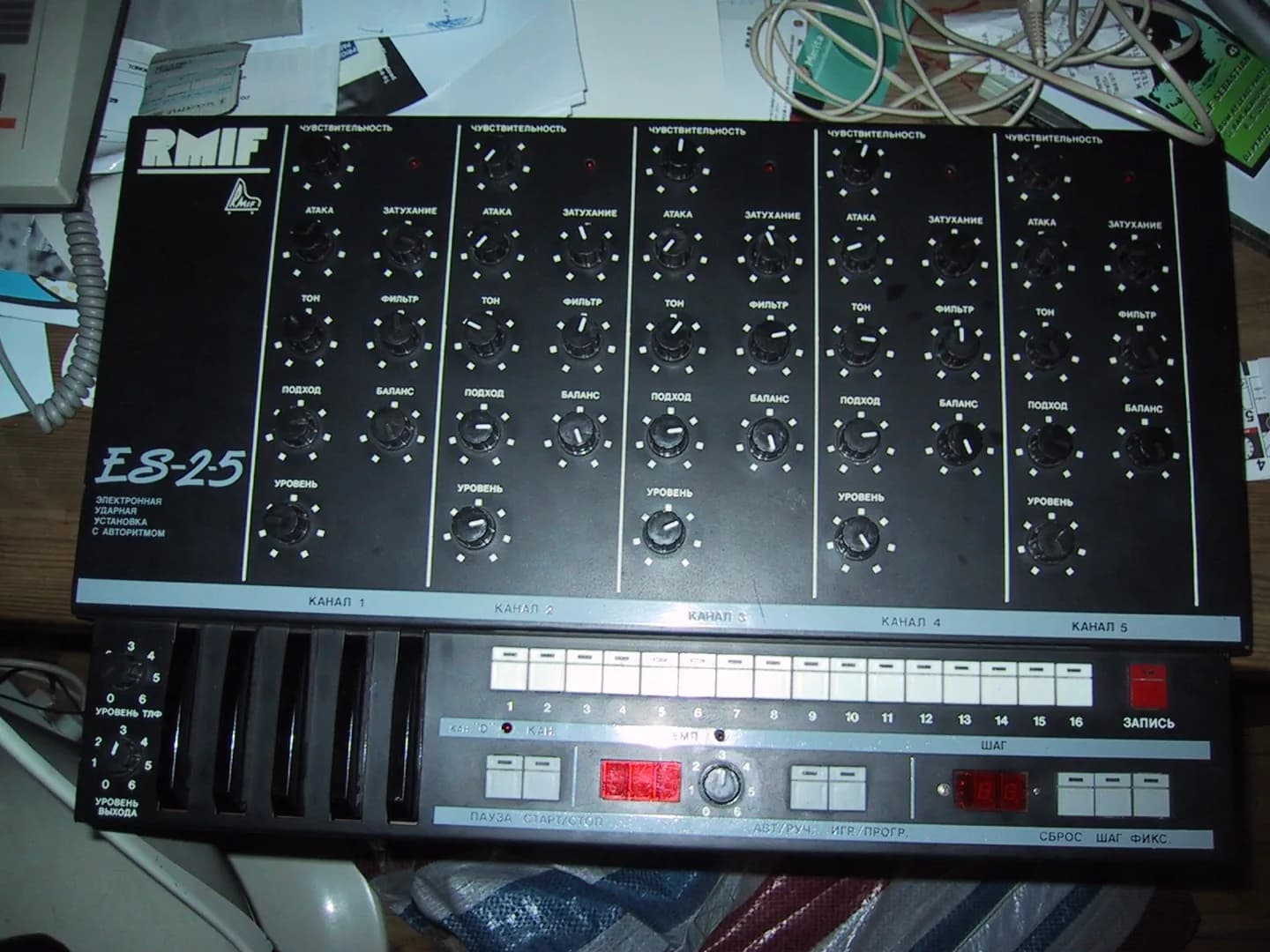
Elsita appears in museum catalogues as another Soviet electronic percussion family. The surviving references cover more than one form, so “Elsita sound” should not be treated as a single circuit recipe. Its importance here is contextual: Soviet electronic drums were a broader field than the two UDS names most visible online.

07 / Global context
How Soviet drum synths differed from Roland and Simmons
The fairest comparison is by workflow, not by declaring one national “sound.” Roland is strongly associated with self-contained rhythm machines in which pattern programming is part of the instrument. Simmons is strongly associated with pad-triggered electronic drum systems. Many Soviet UDS instruments make more immediate sense beside the second category: external performance starts a synthesized voice.
Even that comparison has limits. Product lines changed, individual models used different topologies, and surviving Soviet examples may have been modified. What stands out on UDS-style panels is often the direct access to tone, noise, spectrum, attack, decay and balance—the ingredients of a hit, exposed as performance decisions.
| Reference point | Rhythm source | Sound source | Core gesture |
|---|---|---|---|
| Classic rhythm machine | Internal patterns | Model-dependent | Program a beat |
| Simmons-style system | Pads / triggers | Synthesized voices | Play the module |
| UDS-style system | Pads / external triggers | Tone + noise shaping | Build and trigger a hit |
08 / Components
Analog voices, digital support—and why the label can mislead
In the best-documented UDS examples, the audible voice is commonly described through analog building blocks: oscillation or resonance, noise, filtering, envelopes and amplification. That does not prove that every component in every system is analog. Logic, counting, control or clock functions can be implemented separately from the voice path.
“Analog drum synth” is therefore useful when it describes how the sound is generated, but it should not become a blanket claim about every circuit on every revision. The correct answer lives in the schematic and the specific unit, not in the marketing category.
09 / In the studio now
Using Soviet percussion ideas in modern music
Sequence the triggers
Use a modern sequencer for timing while the voice remains continuously adjustable.
Record parameter passes
Change pitch, decay or noise balance between takes instead of treating one hit as final.
Layer with restraint
A short UDS-style click can define a sample; a resonant body can replace one.
Preserve variation
Small level and contour changes make repeated triggers feel played rather than pasted.
These techniques suit techno, industrial, EBM, electro and experimental pop, but the architecture is not genre-locked. A synthesized hit can be minimal and modern precisely because it is not tied to a famous sampled drum.
10 / The modern connection
From the Lel UDS idea to Tapechild UDS-16
Tapechild UDS-16 carries forward the underlying synthesis logic—tone, noise, transient and time-based shaping—in a modern software instrument. It uses an independently developed, circuit-informed real-time engine rather than samples of a vintage unit.
Independence notice
Tapechild UDS-16 is not an official reissue and is not affiliated with, endorsed by or manufactured by the original Soviet-era makers or their successors. Historical names are used only to identify the instruments discussed.
11 / Sources and method
Manuals, museum records and further reading
The surviving record is incomplete. This article prioritizes manuals and schematics, then checks museum and collector records for model names and physical configurations. Auction-derived descriptions are useful clues, not primary documentation. Where sources disagree, the wording remains conditional.
- Ruskeys museum indexElectronic percussion listings, including Formanta documentation and schematic references.
- MusicTech: Soviet synthesizers overviewSecondary overview of the Formanta UDS voice and pad configuration.
- Matrixsynth Lel UDS archiveAuction-derived panel and control description; treated here as a secondary record.
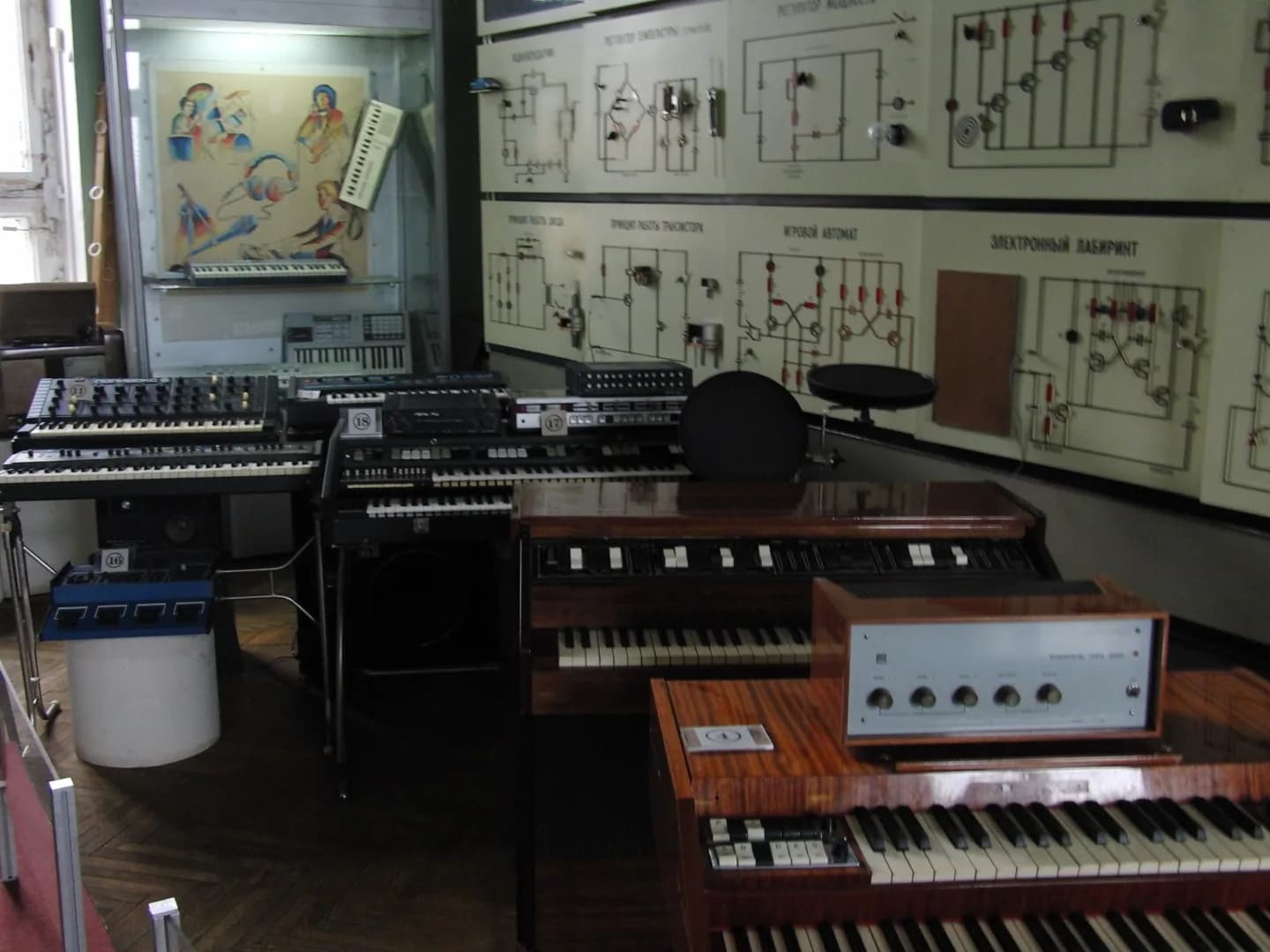
- Moscow Polytechnic Museum display photographA museum view identifying a Lel UDS module and electronic drum pads.
Royalty-free WAV
Free sample packs
Royalty-free WAV, play every sample before you download.
12 / Questions
Frequently asked questions
What is the Lel UDS?
The Lel UDS is a Soviet-era percussion instrument best approached as a compact, two-channel triggered percussion synthesizer rather than a drum machine with pattern memory. Surviving panel photographs, schematics and sale descriptions point to two independently triggered channels, and each hit is assembled from controllable tone and noise behavior instead of being replayed from a recorded sample.
Were Soviet drum machines analog or digital?
In the best-documented UDS examples the audible voice is described through analog building blocks: oscillation or resonance, noise, filtering, envelopes and amplification. That does not prove every component was analog, because logic, counting, control or clock functions can be implemented separately from the voice path. The dependable answer lives in the schematic for a specific unit, not in the marketing category.
How is a Formanta UDS different from a Roland drum machine?
The useful difference is where the rhythm comes from. A classic Roland-style rhythm machine keeps pattern programming inside the instrument. Formanta UDS documentation instead describes an electronic percussion system organized around several channels that pads or external pulses trigger, so a player, an external sequencer or a recording setup supplies the timing while the panel shapes each hit.
Can you still buy a Soviet drum machine today?
Units surface through collectors, auctions and museum-adjacent sale archives, but the surviving record is incomplete. Names, spellings and system configurations vary between manuals and listings, and individual vintage units diverge because component tolerance, calibration, repairs and the recording chain all change the result. Treat auction descriptions as clues and check a unit-specific manual or panel before committing.
Is there a plugin that sounds like the Lel UDS?
Tapechild UDS-16 carries the same synthesis logic forward — tone, noise, transient and time-based shaping — in a modern software instrument. It runs an independently developed, circuit-informed real-time engine rather than samples of a vintage unit, so it is not a reissue, not affiliated with the original Soviet-era makers, and not a claim to reproduce any single surviving machine.
Continue reading
From history to sound design
At a glance
| Instrument | Practical type | Useful distinction |
|---|---|---|
| Formanta UDS | Multi-voice electronic percussion system | Pads and external triggers drive synthesized percussion voices |
| Lel UDS | Two-channel triggered percussion synthesizer | Tone and noise paths are shaped independently, then blended |
| Marsh / March UDS | Electronic percussion instrument | Documentation and transliteration vary between surviving references |
| Elsita | Electronic drum system | Best treated as a related family name, not a single universal circuit |