UDS-1987
01The original analog channel: a free-running tone, raw digital noise for the texture, a resonant click for the attack, and an output stage that bites when you push it.

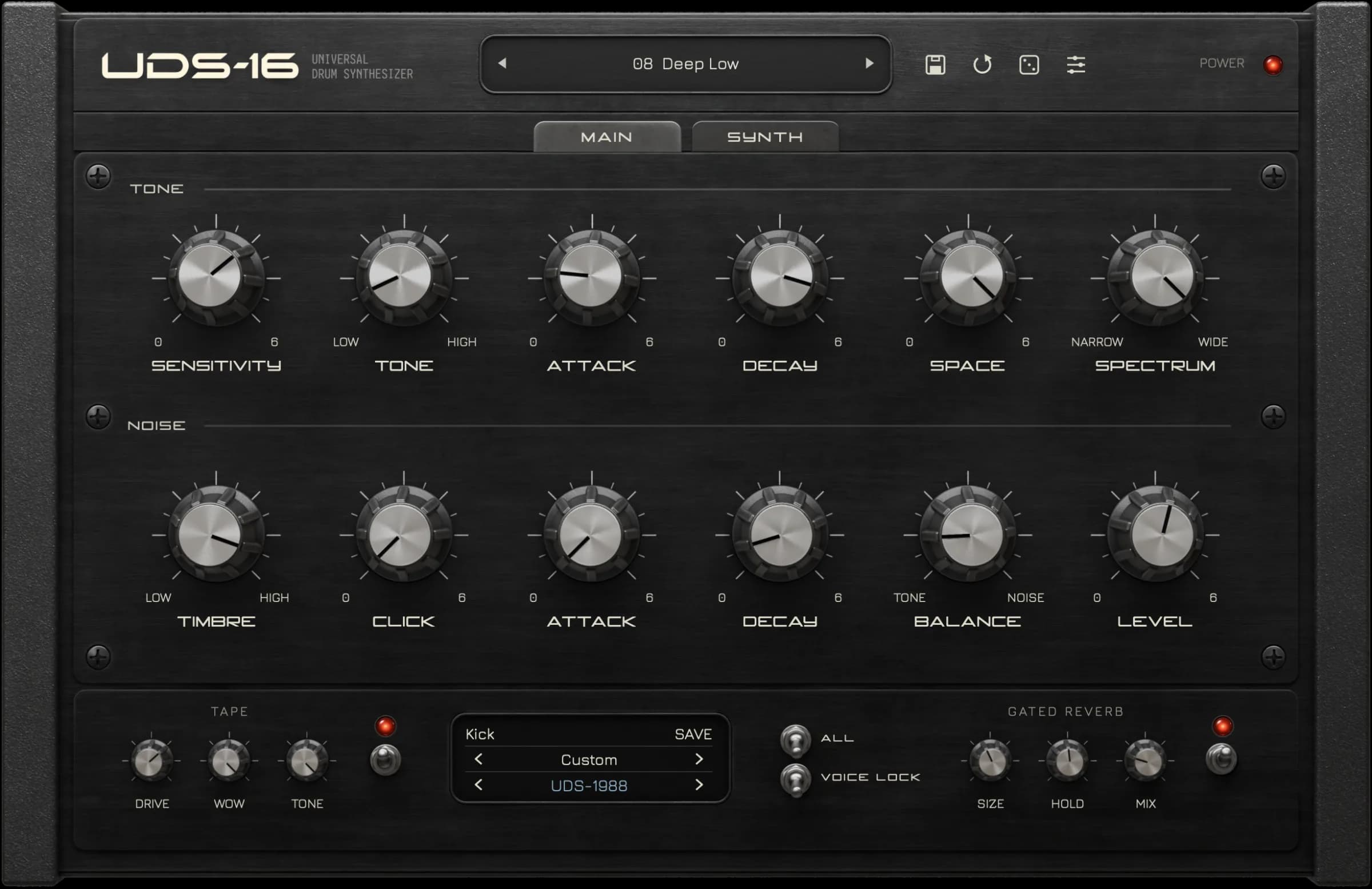
Give your drumsa different character.
A 16-voice drum synth with four synthesis models, 20+ factory kits, and built-in tape saturation and gated reverb.
Inspired by Soviet percussion synthesizers.
$49 through October 31, then $79. One-time purchase.
Mac: Apple Silicon + Intel · Windows 10/11







Seven short arrangements built around UDS-16 drums, each labelled with the preset behind it.
Ready to play
Drag the waveform to seek.
0:00 / 0:16
AUDIO DEMOS
I've got more drum plugins than I care to admit. This one actually sounds different. The kicks are nasty, the snares have that weird metallic edge, and the whole thing just has a vibe. Love it.
Wasn't expecting much for the price. Holy crap. This thing sounds HUGE. Not another generic drum machine. There's some real personality here.
Been playing around with it for a couple days now. Some really nice sounds in here. Especially the kicks. Still figuring everything out but so far so good.
I have a bunch of drum machines already and honestly didn't need another one lol. But this one has a different sound to it. Glad I picked it up.
Sounds great. Was hoping to use it in Reason Rack too, but there's no Rack Extension version. Other than that, really happy with it.
Those kicks are MEAN. Wasn't expecting this little thing to hit that hard. Definitely keeping this one in my setup.
Never thought I'd be making beats with something inspired by the Soviet Union lol. You guys are cooking up some wild stuff over there. Keep it coming!
A unique, raw analog character — exactly the sound I’d been missing. A real window into the era.
I had to get it and I’m now addicted. SO good.
Two models drawn from the Lel UDS channel, one from the Formanta Rockton, and one Tapechild original. Read about the Soviet drum machines behind each model below, or start with how drum synthesis works.
The original analog channel: a free-running tone, raw digital noise for the texture, a resonant click for the attack, and an output stage that bites when you push it.
An alternative voicing of the Lel UDS channel. Shape the tone, noise and attack to build your own percussion, then use it on any drum in the kit alongside the other three models.
Tapechild original
Tapechild’s original synthesis model. Shape the body and pitch movement, blend in noise and attack, then add metallic colour with MATERIAL or saturation with DRIVE. Build anything from deep kicks to sharp, textured percussion.
Inspired by the seven-channel Formanta Rockton and expanded into a sixteen-voice kit, with a tunable metallic tone and separate envelopes for tone and noise.
01 / TAPE
Saturation thickens each hit and adds harmonics as you push it.
DRIVE / WOW / TONE
02 / GATED REVERB
Adjust the room size, set how long the reverb tail lasts, and blend it with the dry signal.
SIZE / HOLD / MIX
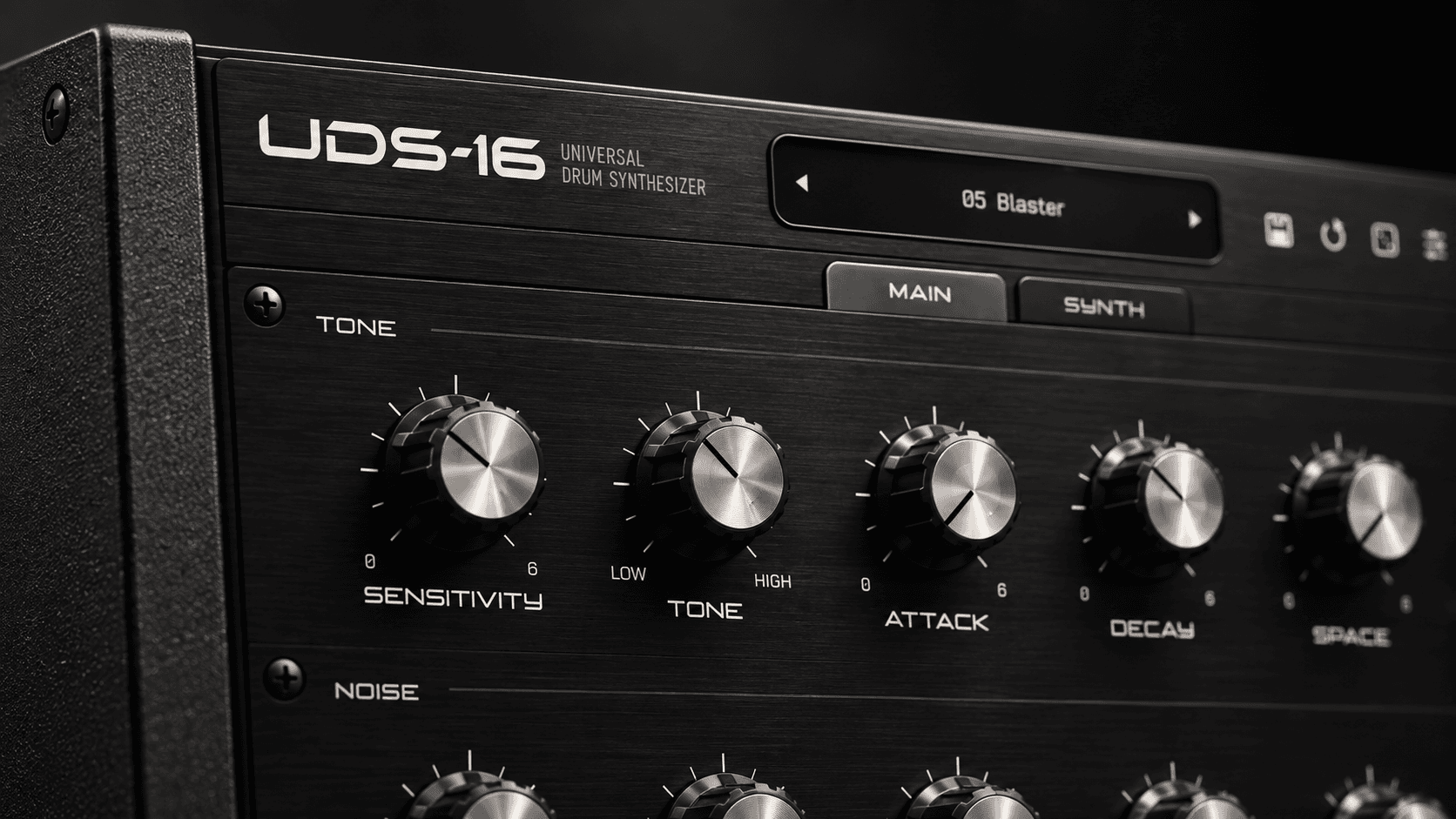 Synthesis controls
Every drum is built from a tone layer and a noise layer, so you can decide how much of the hit is weight and how much is air.
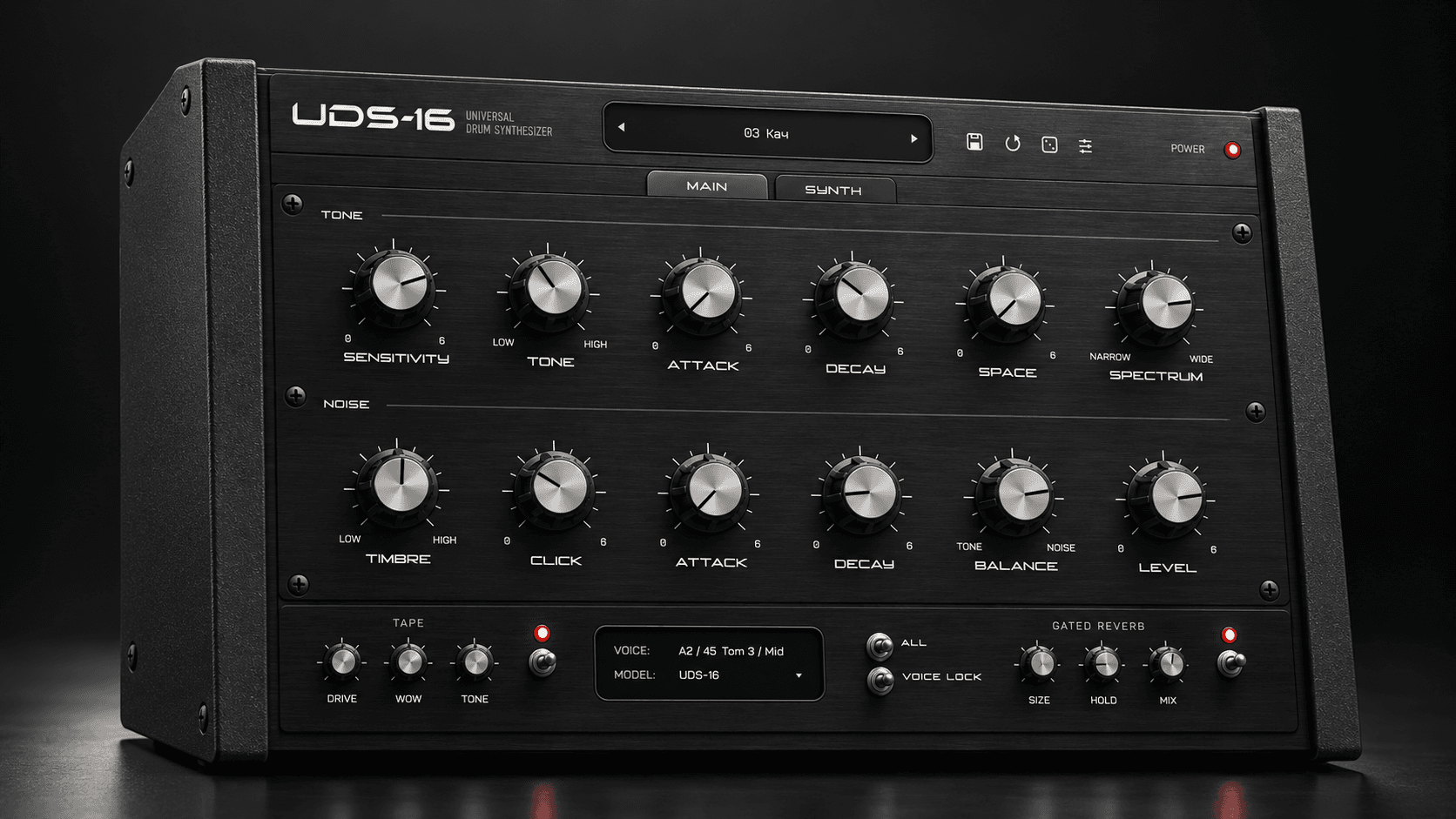 Factory kits & drum presets
Start with one of 20+ factory kits.
Choose a synthesis model and adjust the sound.
Finish with built-in tape saturation and gated reverb.
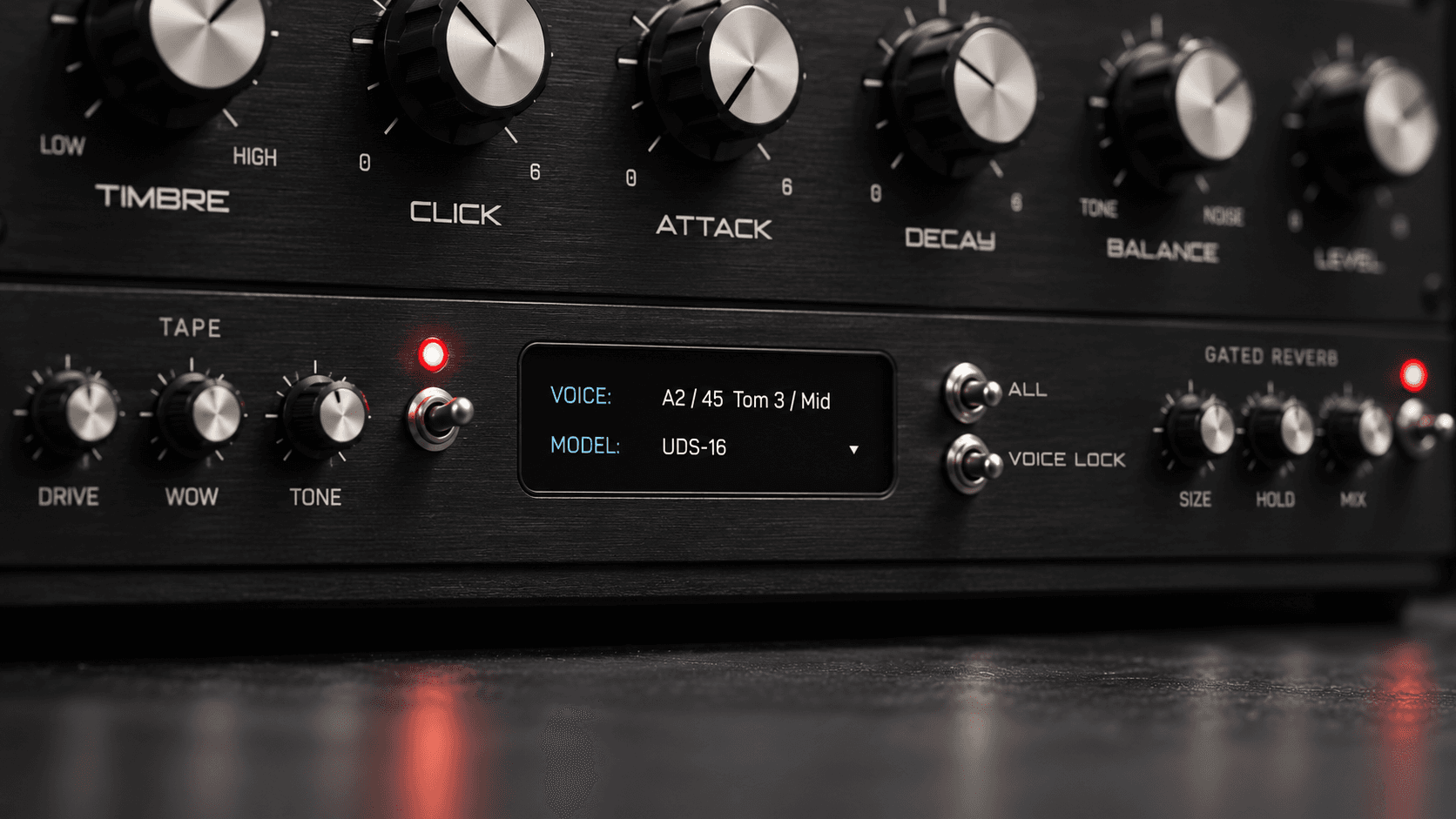 Tapechild original model
The Tapechild model combines a pitched body, a noise layer and a short transient. Adjust the pitch envelope, add metallic harmonics with MATERIAL, and saturation with DRIVE.
Build a full kit and shape each drum individually.
Choose UDS-1987, UDS-1988, UDS-16 or ROKTON for each drum.
Start with a factory kit, then save your own kits and drum presets.
Both effects are built into the instrument.
VST3, AU on Mac, and standalone versions included.
Activate on up to 3 computers. Free updates for UDS-16. No subscription.
macOS 11+ · Apple Silicon & Intel · Windows 10/11 (64-bit)
Your license key is sent by email after payment. Download the installers from your Tapechild account. Free updates for UDS-16. No subscription.
macOS 11 or later on Apple Silicon and Intel: VST3, AU and standalone. Windows 10 or 11, 64-bit: VST3 and standalone. Use a DAW that supports the corresponding plugin format.
No. UDS-16 synthesizes its drum sounds in real time.
UDS-16 draws inspiration from the original circuits, with additional sound-shaping controls. It is not an exact recreation of the hardware or an official Lel or Formanta product.
After payment, your license key is emailed to you. Sign in with your purchase email to download the installer. Activate on up to 3 computers, online or offline. No subscription or iLok.
There is no trial version. Listen to the audio demos on this page, or email team@tapechild.com with questions before buying.