
12 Best Drum Synth Plugins (Free & Paid) in 2026
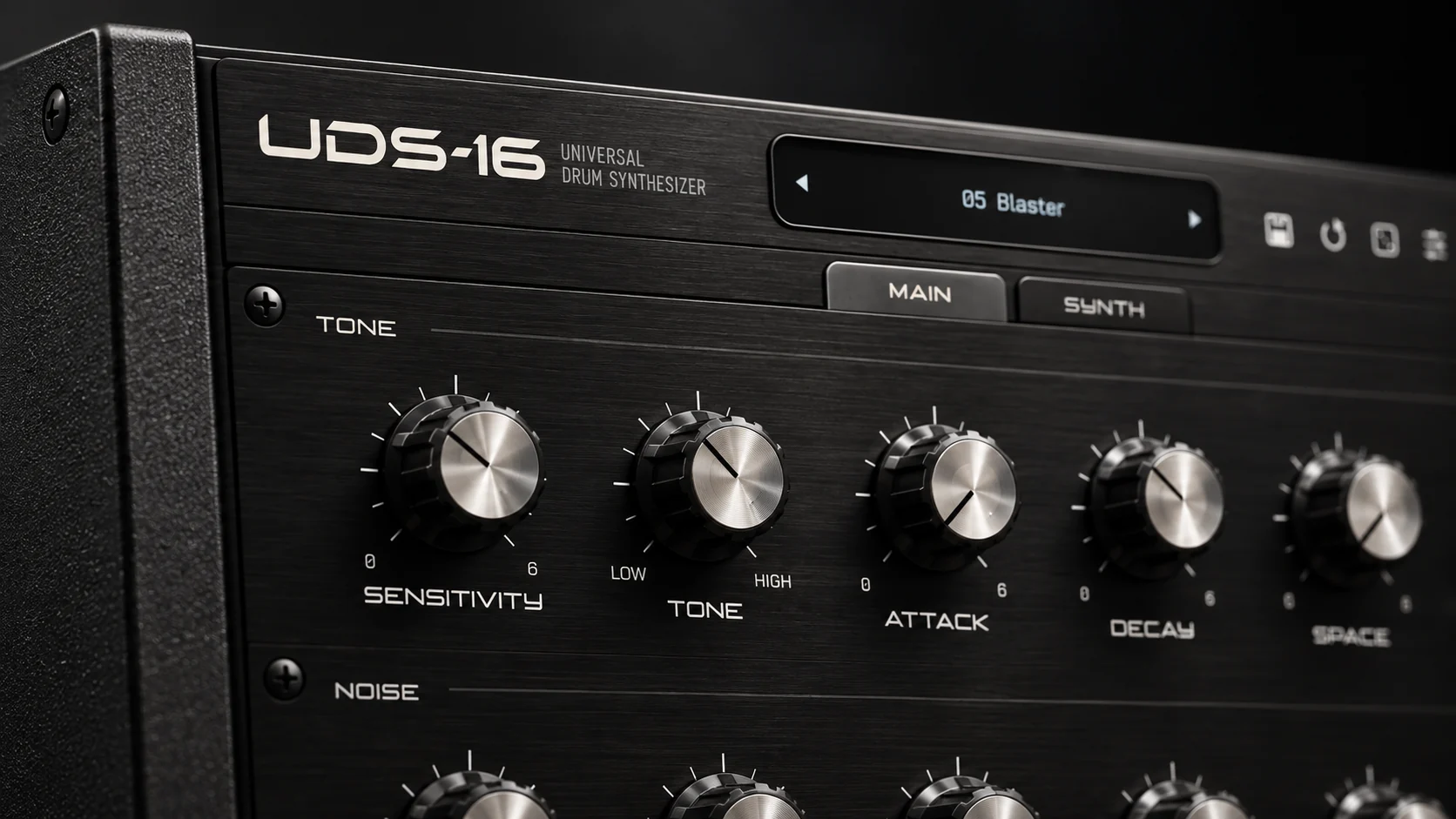
Twelve instruments that build every kick, snare and hat from oscillators, noise and envelopes instead of replaying a recording. Nine cost money, three are free, and they are not all competing for the same job. The list is ordered by scope: full drum machines first, single-purpose voices last.
The short answer
If you want to write patterns and design sounds in one window, Sonic Charge Microtonic is still the plugin to beat, twenty years on. If you want the widest palette of synthesized drum types in a single kit, AIR Drum Synth 500 covers eight categories with several synthesis modes each. If you already sequence in your DAW and want one voice with an unusual character, the focused instruments at the end of the list — KICK 2 for kicks, VSDS-X for Simmons-style toms, and our own UDS-16 for Soviet-circuit percussion — do one thing each and do it better than a workstation does.
If the synthesis methods themselves are unfamiliar, our guide to what a drum synth is and how drum synthesis works explains what tone, noise, click and envelope controls actually do. For the hardware these plugins descend from, see analog drum machines.
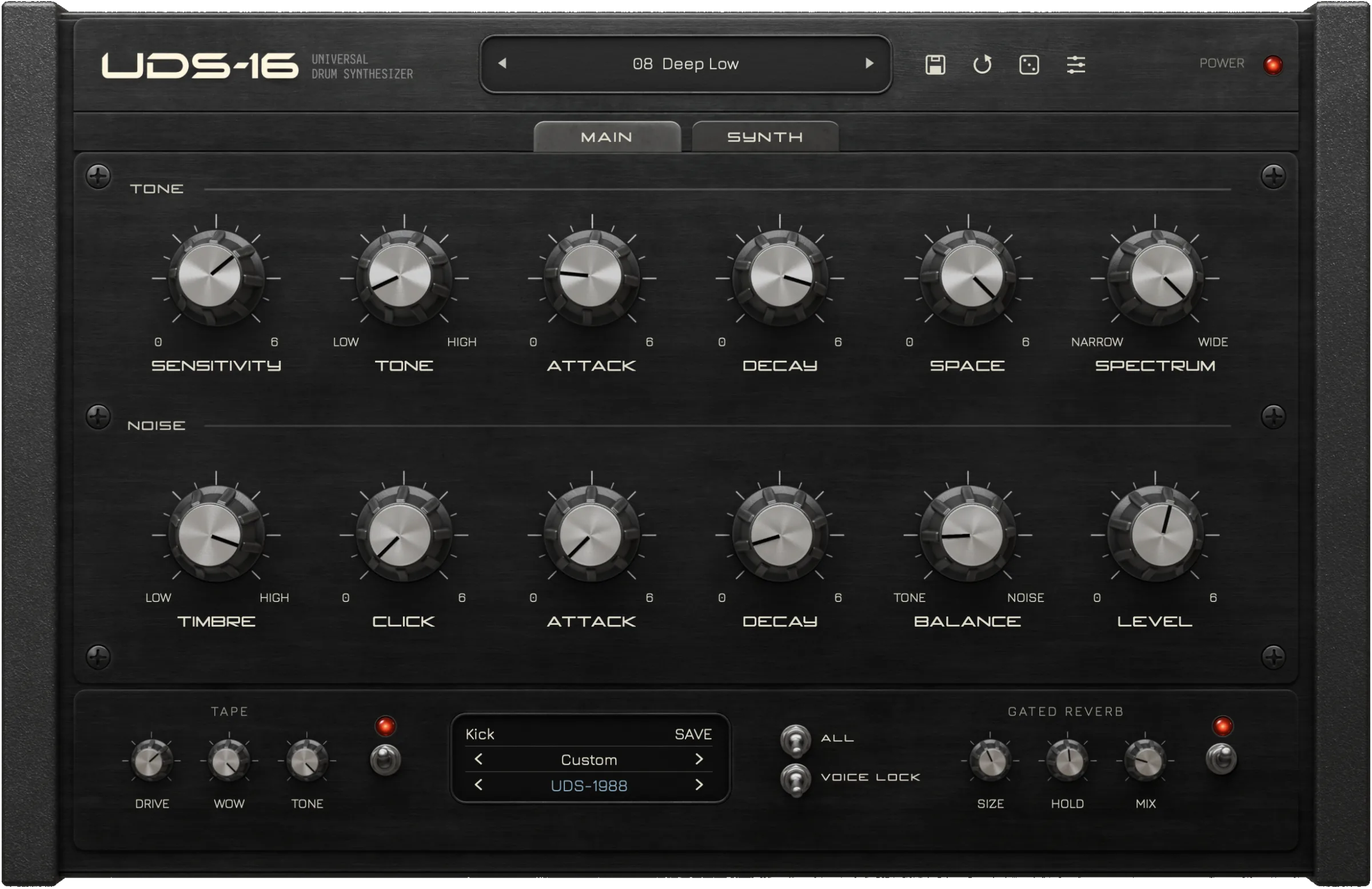
Ours: Tapechild UDS-16 is the one on this list we make: sixteen voices, four synthesis models — three drawn from Soviet drum machines, one our own — with tape saturation and gated reverb built in. VST3, AU and Standalone for macOS and Windows, $49 one-time at the time of writing. Hear the demos on the UDS-16 page.
Drum synth plugins compared
| Plugin | Developer | Type | Formats | OS | Price band | Free? |
|---|---|---|---|---|---|---|
| Microtonic | Sonic Charge | Drum machine, synth only | VST2, VST3, AU | macOS, Windows | $50–100 | Trial |
| Drum Synth 500 | AIR Music Technology | Kit designer, multi-engine | VST2, VST3, AU, AAX | macOS, Windows | Under $100 list, often discounted | No |
| Nepheton 2 / Drumazon 2 | D16 Group | Drum machine, 808 / 909 emulation | VST2, VST3, AU, AAX | macOS, Windows | $100–200 | Demo |
| Spark 2 | Arturia | Drum machine, hybrid synth + samples | VST, AU, AAX, Standalone | macOS, Windows | $100–200 | Demo |
| Tekno | Baby Audio | Kit designer, multi-engine | VST, VST3, AU, AAX | macOS, Windows | $50–100 | Trial |
| DrumSpillage 2 | AudioSpillage | Kit designer, model-based | AU only | macOS only | $50–100 | Demo |
| VSDS-X | Aly James Lab | Focused voice, Simmons-style | VST3, AU | macOS, Windows | Under $100 | No |
| KICK 2 | Sonic Academy | Focused voice, kick | VST, VST3, AU, AAX | macOS, Windows | Around $100 | Trial |
| UDS-16 (ours) | Tapechild | Focused voice, Soviet circuits | VST3, AU, Standalone | macOS 11+, Windows 10/11 | $49 one-time | No (audio demos) |
| SUB | Sampleson | Compact module, 18 voices | VST, AU, Standalone | macOS, Windows | Free | Yes |
| VCV Rack 2 | VCV | Modular, drum modules | Standalone (plugin needs Pro) | macOS, Windows, Linux | Free / Pro paid | Yes |
| Surge XT | Surge Synth Team | General synth with drum patches | VST3, AU, CLAP, LV2 | macOS, Windows, Linux | Free | Yes |
The best drum synth plugins in 2026
Numbered for reference, not as a ranking; number one and number nine are not competing. Samplers — Battery, XO, Sitala, Groove Agent — are left out because they replay recordings rather than synthesize them.
1. Sonic Charge Microtonic
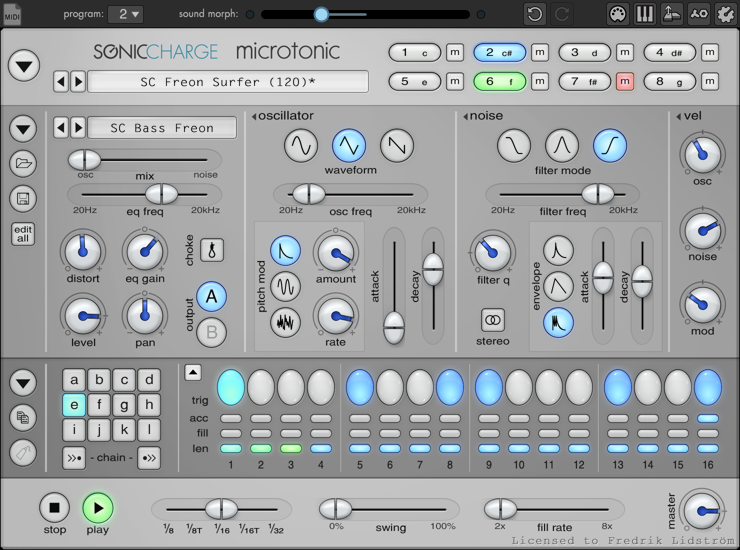
Eight drum channels, each with a pitched oscillator, a filtered noise source and their own envelopes, in front of a pattern sequencer with twelve patterns per preset. Everything is synthesized in real time; there is no sample layer at all. Microtonic first shipped in 2003 and has been maintained ever since, which is why it still turns up in every list like this one and why its patch-sharing community is so large.
The synthesis is simple by modern standards — two sources per channel, a few envelope stages, distortion and EQ — and that simplicity is the point. You reach a usable kick or hat in seconds, and the whole pattern lives inside the plugin. Best for producers who want sound design and beat writing in the same window. The caveat is the ceiling: two sources per channel cannot do FM metallics or acoustic-leaning modelling, and the interface has aged. Official Microtonic page · UDS-16 vs Microtonic
2. AIR Drum Synth 500
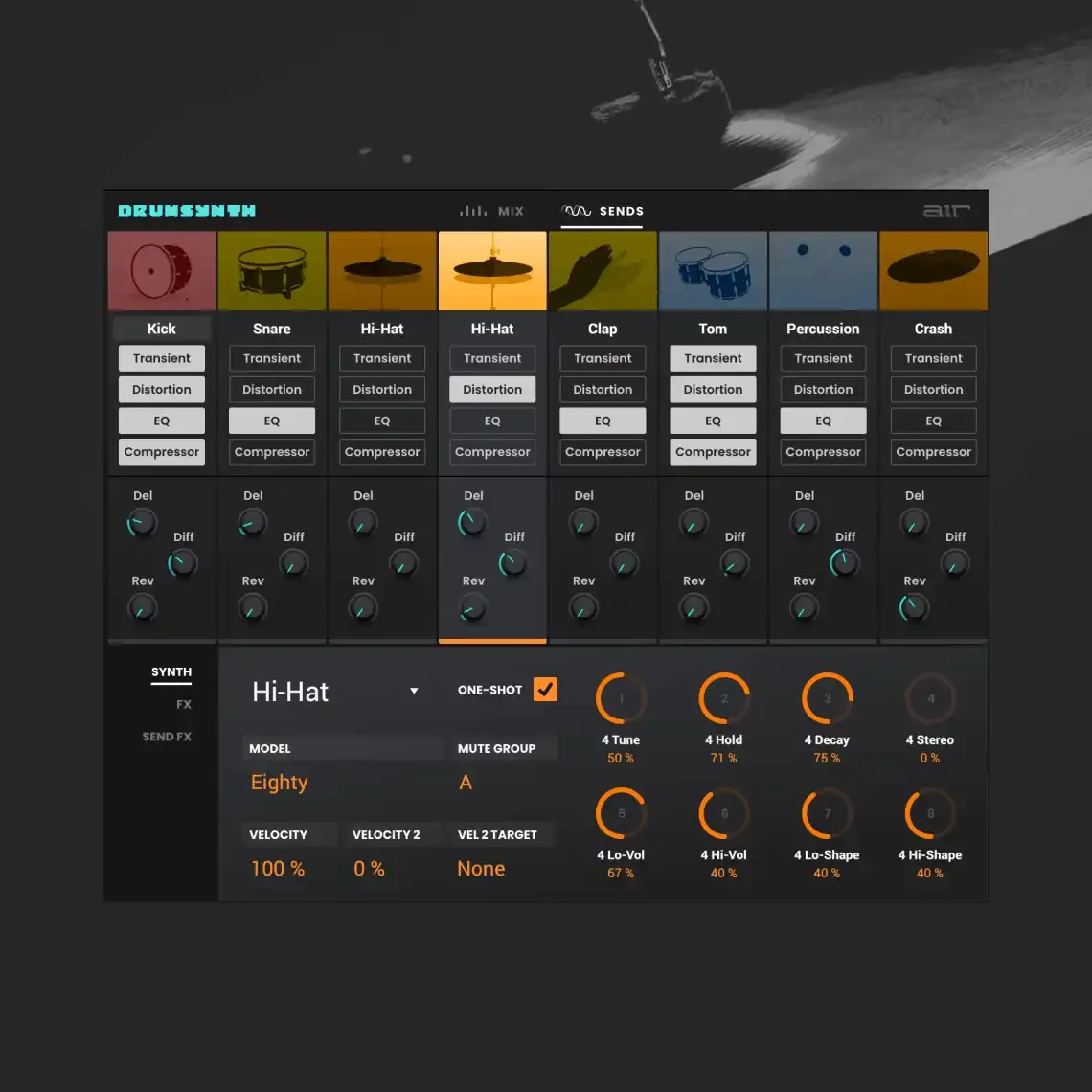
Eight drum categories — kick, snare, clap, hi-hat, tom, percussion, crash and ride — each with a choice of synthesis engines that mix analog-style modelling, FM and physical modelling. Per-channel transient shaping, distortion, EQ and compression sit after the engine, so a kit can be finished without leaving the plugin. There is no sequencer; you play it from the DAW.
Best for someone who wants the widest spread of synthesized drum types under one roof without committing to a single method. The caveat is the same breadth: no engine goes as deep as a dedicated instrument, and the sound leans clean and polished rather than characterful. The list price is under $100 and it is discounted steeply and often, so never pay full price. Official Drum Synth 500 page · UDS-16 vs Drum Synth 500
3. D16 Group Nepheton 2 and Drumazon 2
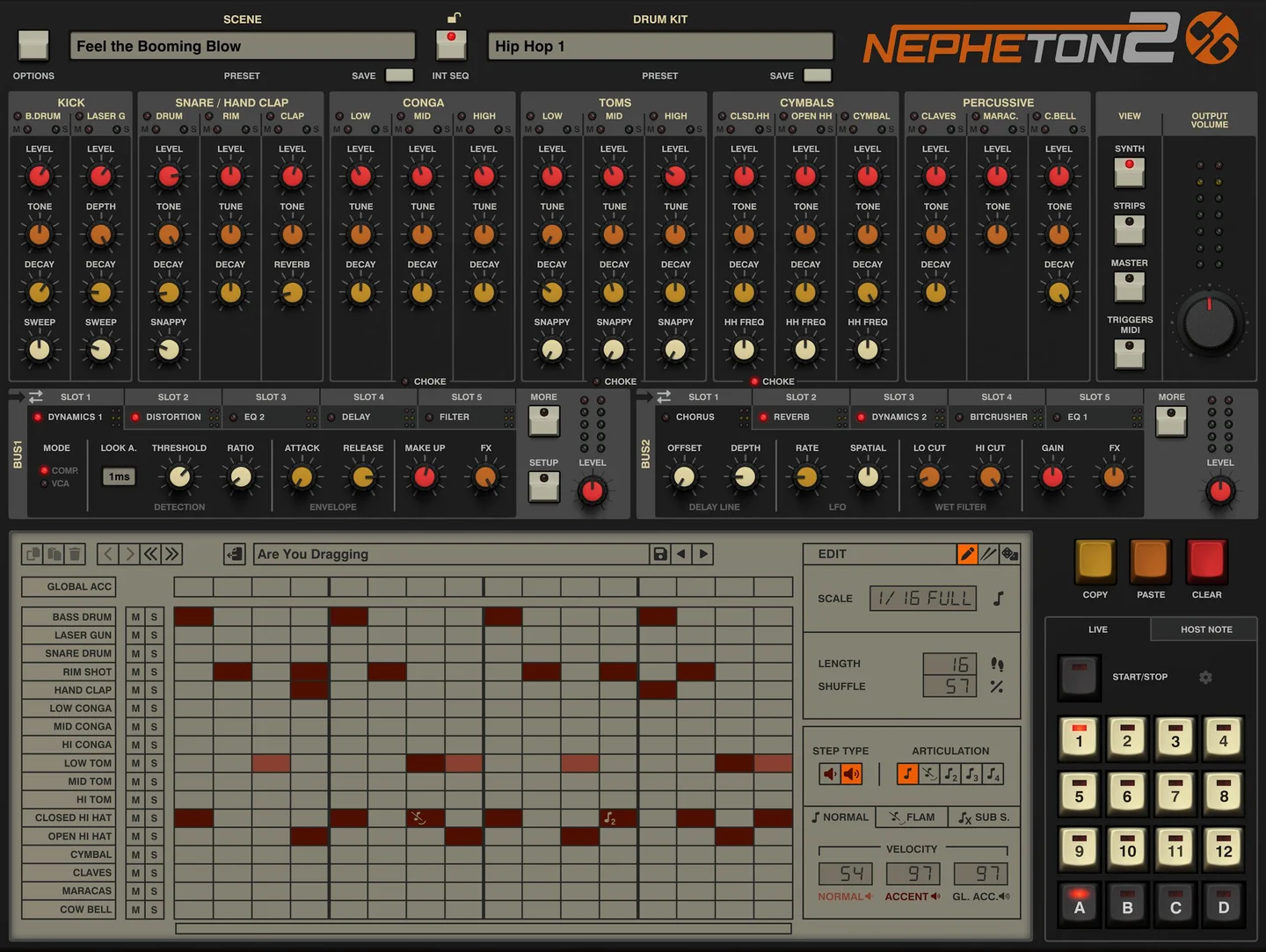
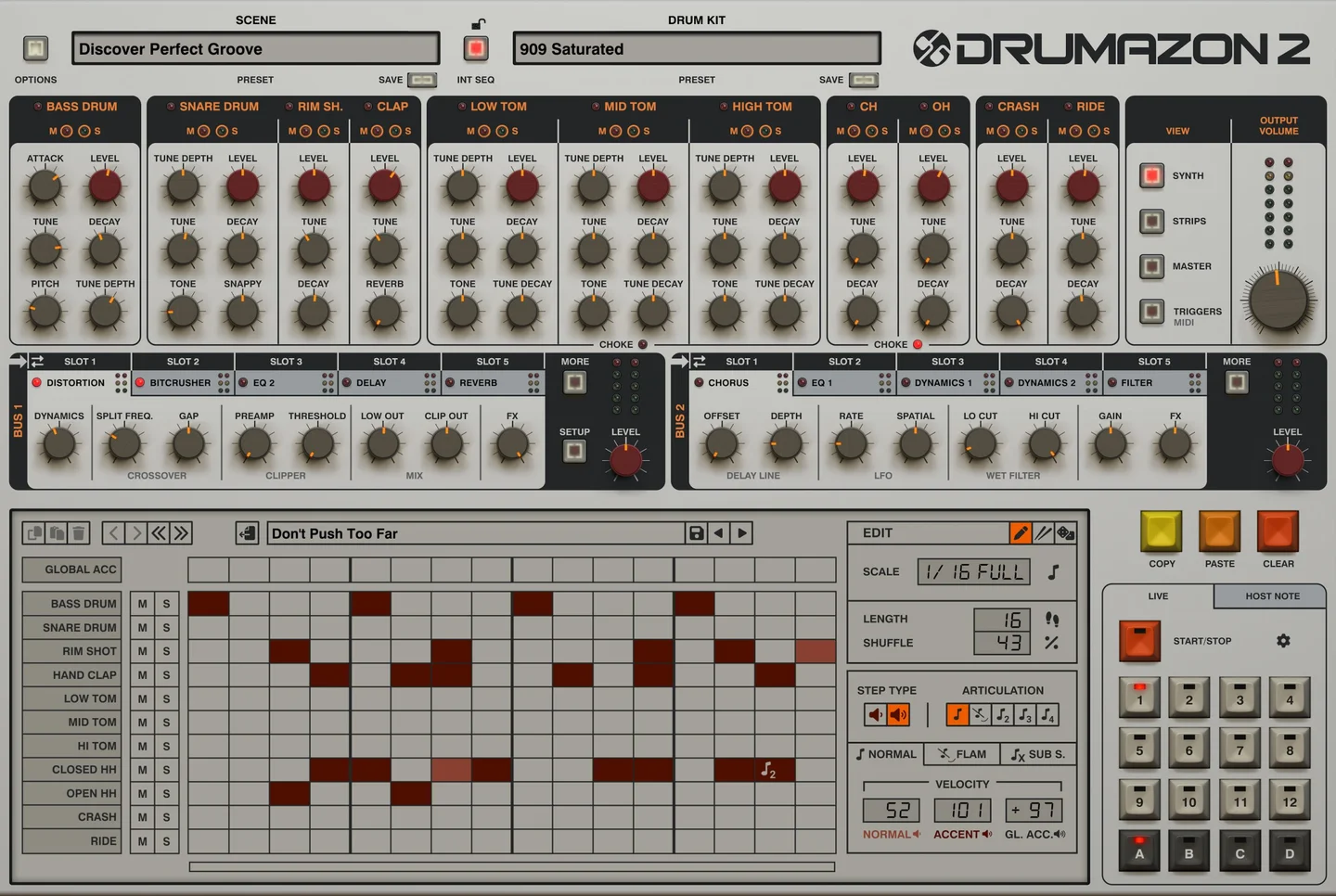
Two separate plugins from the same developer: Nepheton 2 models the Roland TR-808, Drumazon 2 the TR-909. Both are circuit-level emulations with every voice synthesized — the 909’s sampled cymbals and hats are the one place a recording is involved, exactly as on the hardware — and both carry a full step sequencer with the original’s accent, flam and shuffle behaviour plus modern additions like per-step probability.
Best for anyone who wants the 808 or 909 specifically and wants the parameters to behave like the machine, tuning tricks included. Not a general-purpose drum synth: pushing a Nepheton kick outside 808 territory is hard by design. The price sits at the upper end of this list, and you pay twice for both machines. D16 Group plugins · UDS-16 vs Nepheton 2 · UDS-16 vs Drumazon 2
4. Arturia Spark 2
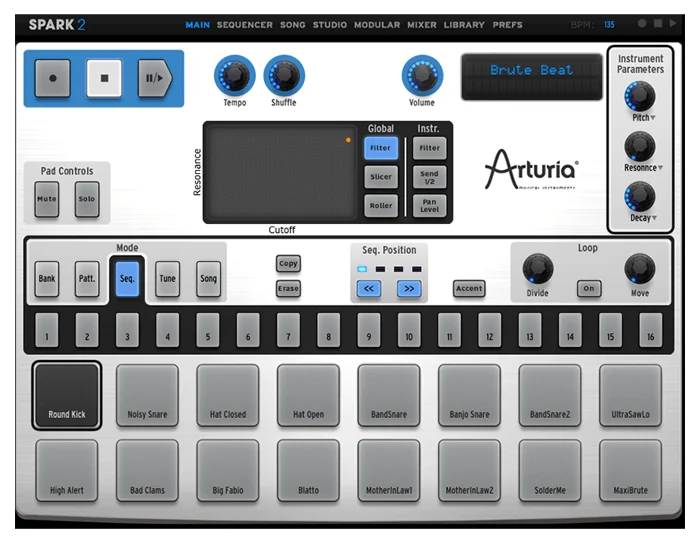
The hybrid on the list. Spark 2 is a full drum workstation with a 64-step sequencer, a mixer, effects and a large library, and its sound engines include Arturia’s analog-modelling and physical-modelling synthesis alongside sample playback. Many of the factory kits are samples; the synthesis lives in the modular sound-design page, where you can patch a voice from oscillators, filters and envelopes.
Best for a producer who wants one instrument for a sampled acoustic kit on Monday and a synthesized kit on Tuesday, and who likes building the whole groove inside a plugin. The caveat is what you are buying: a drum machine that can synthesize, not a drum synth. If synthesis is why you are reading this, most of Spark is weight you will carry without using. Official Spark 2 page · UDS-16 vs Spark 2
5. Baby Audio Tekno
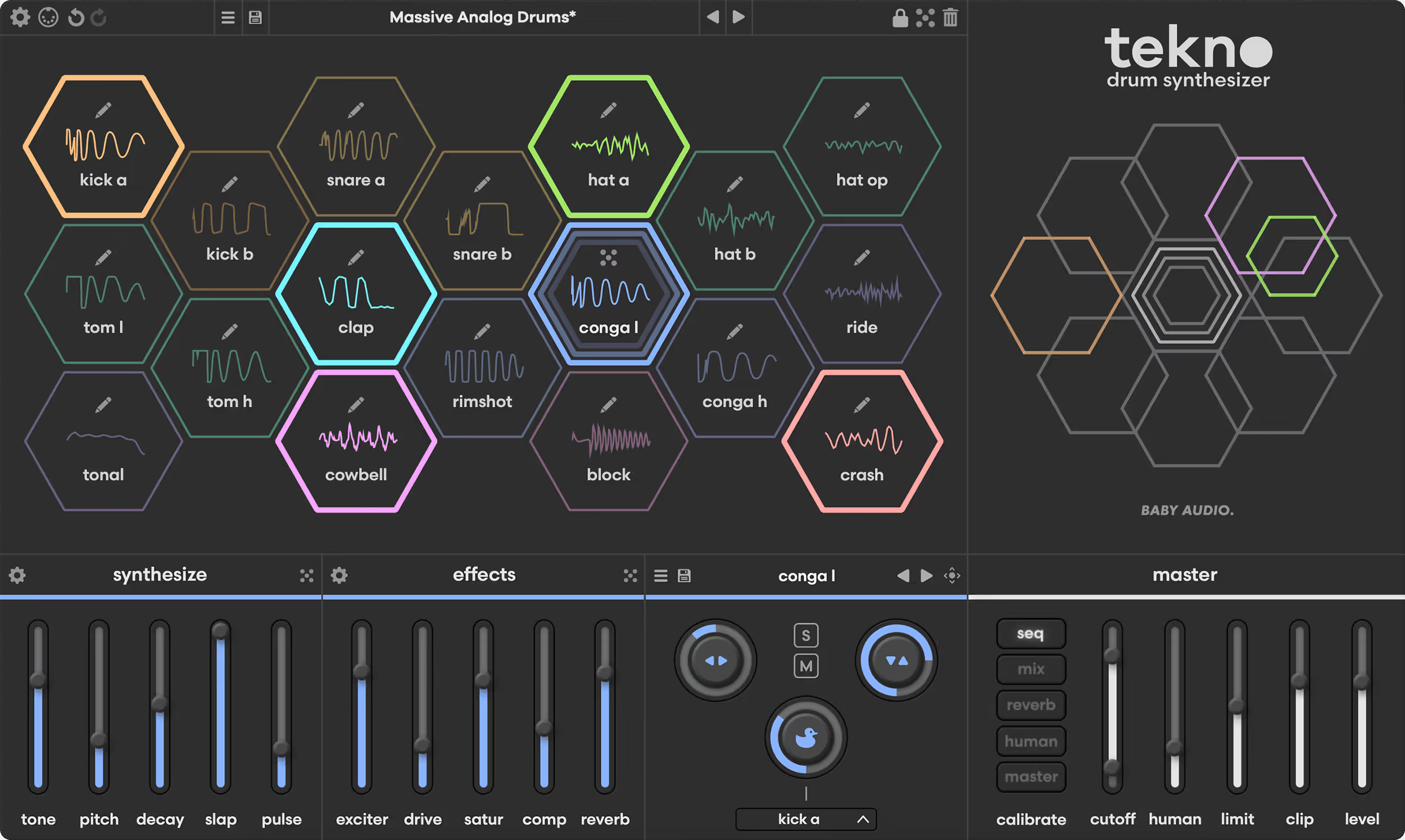
A newer kit designer built around eighteen synthetic engines that draw on analog modelling, FM and digital methods, arranged in a honeycomb of voices — kick, snare, hat, clap, tom, conga, cowbell, crash — with synthesis, effects and master sections under them. It is aimed at techno and its neighbours, and the factory content shows it.
Best for someone who wants a modern interface, a wide palette and a fast route to a finished electronic kit. The caveat is that it is squarely a workstation: if your DAW already builds and plays kits, you are paying for overlap. It is also young next to Microtonic or the D16 pair, so the preset ecosystem is thinner. Official Tekno page · UDS-16 vs Tekno
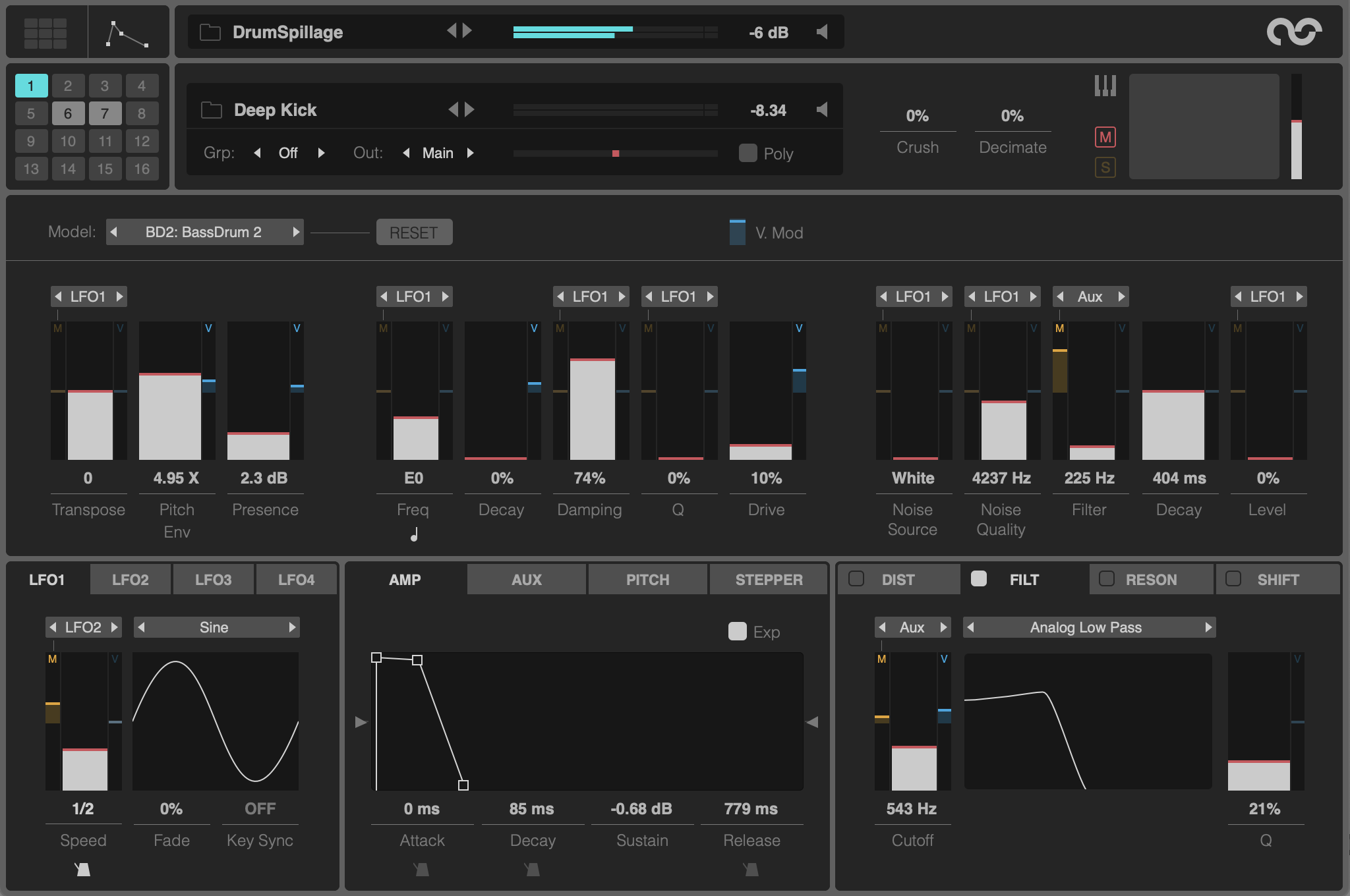
6. AudioSpillage DrumSpillage 2
Twelve specialised drum models spanning analog-style, physical-modelling and FM techniques, each with its own parameter set, plus four LFOs and a modulation system deep enough that presets barely scratch it. This is a sound designer’s drum synth rather than a preset browser, and the results can go places the multi-engine kits above do not: bowed metal, membrane-like toms, unstable noise percussion.
Best for patient exploration on a Mac. That is the caveat in one line: Audio Unit only, macOS only, so Windows users and VST-only hosts are out. The interface is functional rather than pretty and the learning curve is real. Live with both and it is the most idiosyncratic paid entry here. Official DrumSpillage page · UDS-16 vs DrumSpillage 2
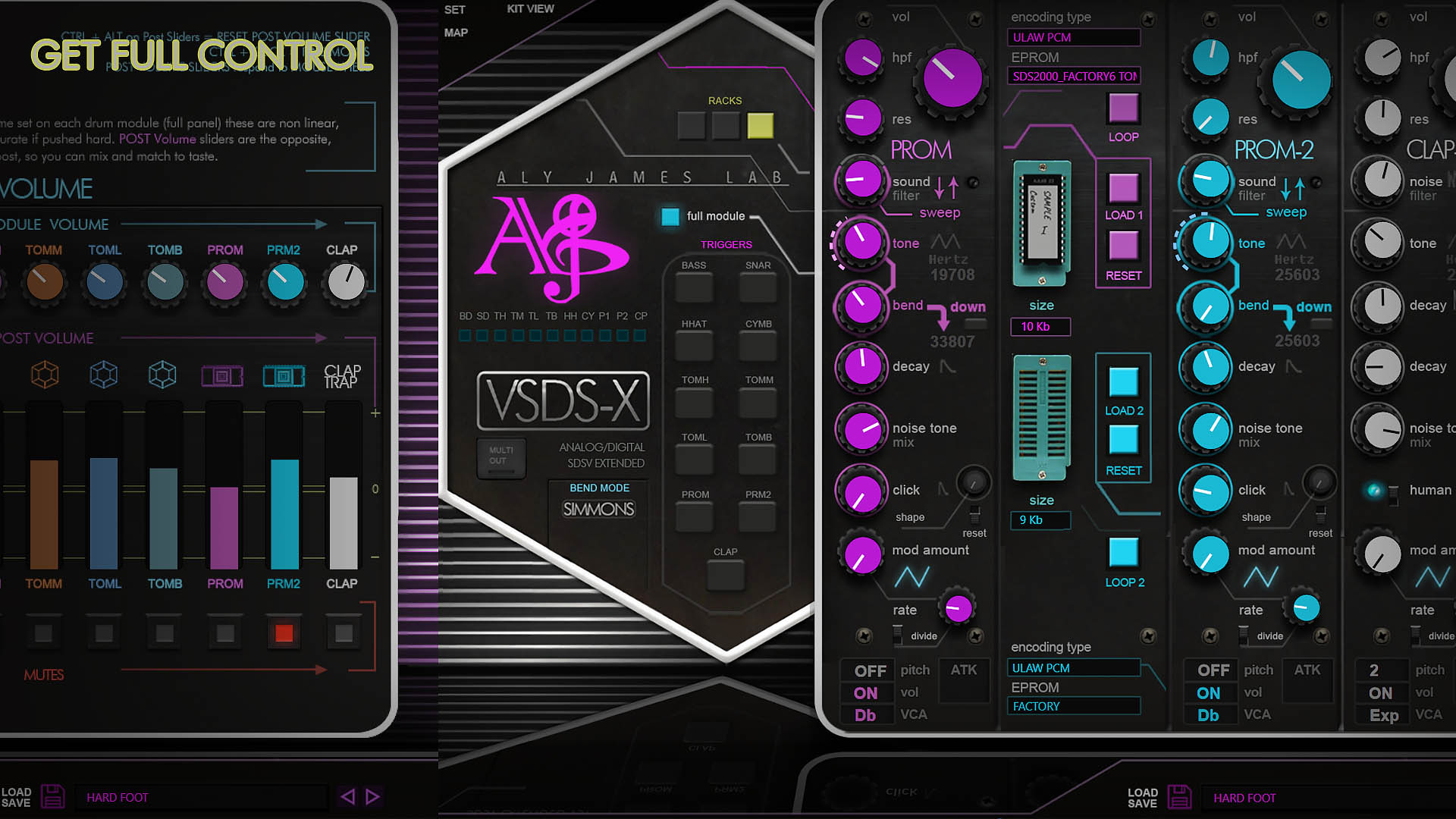
7. Aly James Lab VSDS-X
A deliberately narrow instrument that emulates the voice architecture of the Simmons SDS-V, the hexagonal-pad electronic kit that defined early-1980s drums. Each voice has the Simmons controls — tone, bend, decay, noise, click — and the plugin adds an EPROM-style sample section for the later Simmons hybrid sounds. The pitched tom sweep that everybody recognises is one knob away.
Best for synth-pop, synthwave and anyone who wants that specific vocabulary rather than a general kit. The caveat is the flip side: it is not trying to be an 808, a 909 or an FM percussion set, and outside the Simmons idiom it has little to offer. It is a small developer’s product, so check current format and OS support before buying. Official VSDS-X page · UDS-16 vs VSDS-X
8. Sonic Academy KICK 2
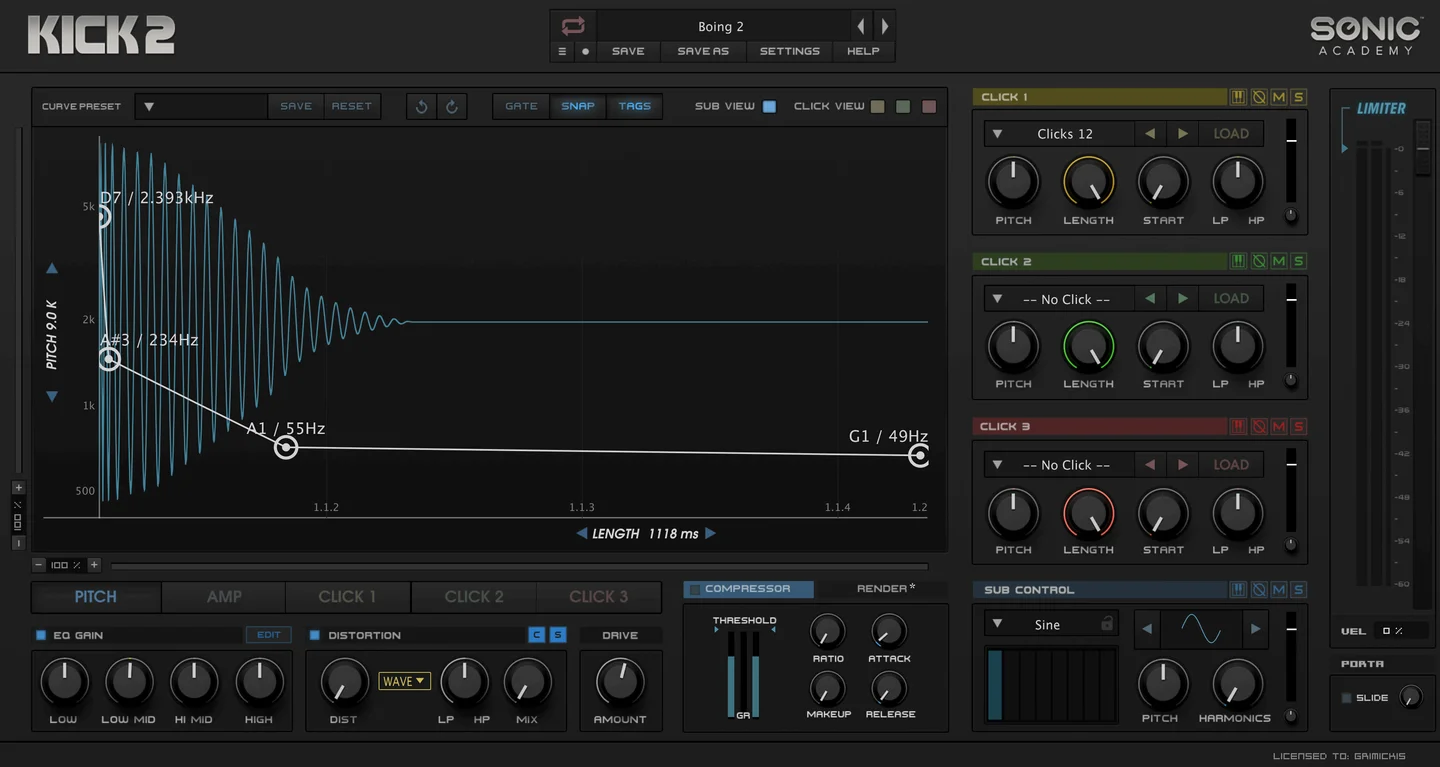
One drum, done thoroughly. KICK 2 synthesizes the body of a kick from a sub oscillator whose pitch and amplitude envelopes you draw by hand as curves, and layers up to three click or transient samples on top for the attack. The envelope editor is the whole product: you can see the pitch drop and shape it point by point, which no all-in-one drum synth lets you do as precisely.
Best for genres where the kick is the record — techno, house, drum and bass, trap — and for anyone who has fought a sampled kick that would not sit in key. The caveat: it is one drum, and the attack layer is sample-based, so strictly it is a hybrid. Sonic Academy also sells kick packs, and the plugin nudges you towards them. Official KICK 2 page · UDS-16 vs KICK 2
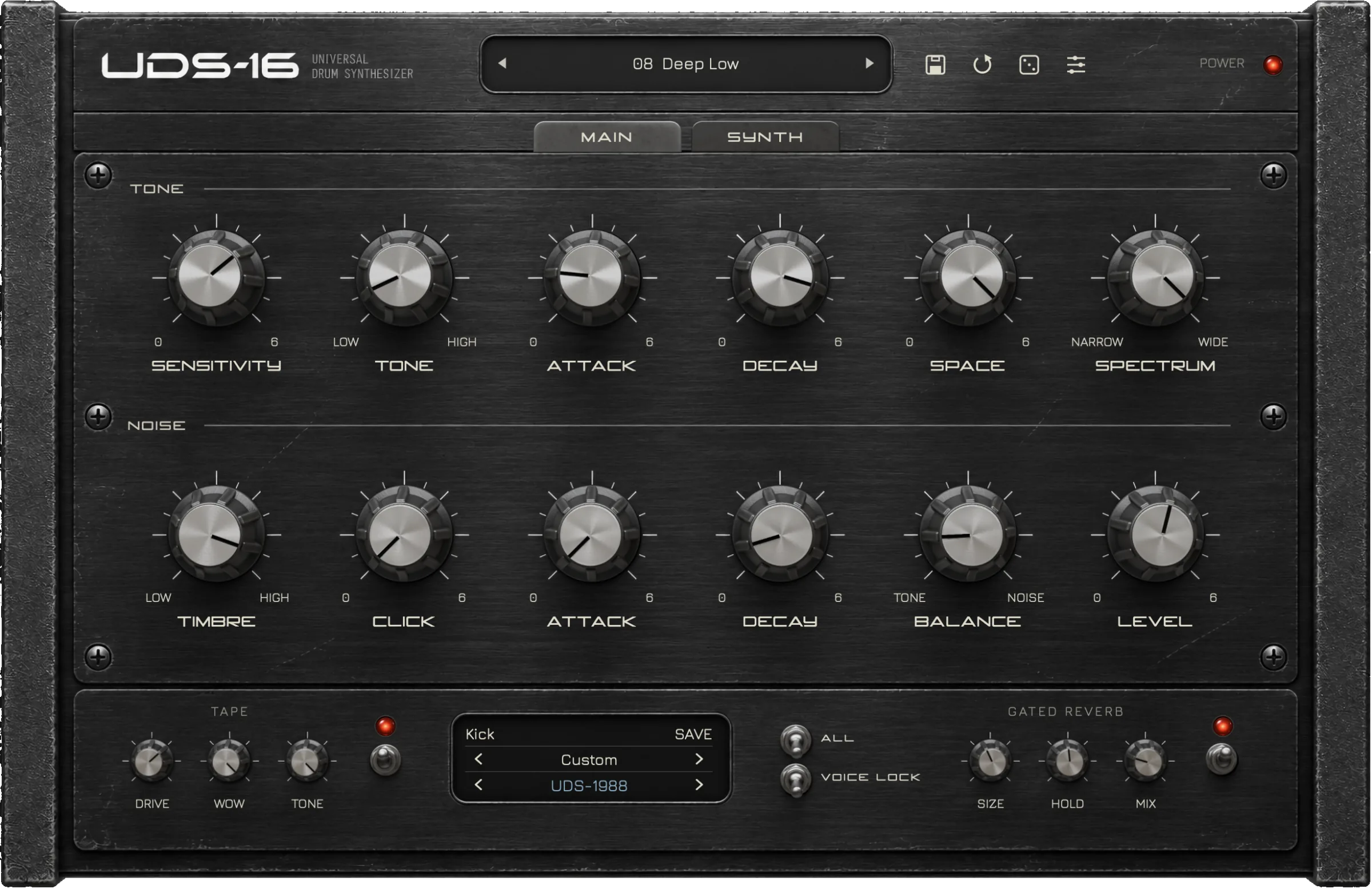
9. Tapechild UDS-16 (ours)
Our own plugin, listed here because its scope matches the two entries above it. UDS-16 is a sixteen-voice drum synthesizer with four models: UDS-1987, a circuit model of a channel from the Soviet Lel UDS; UDS-1988, a later revision; ROKTON, built from the schematics of the seven-channel Formanta Rockton that collectors call the Soviet 808; and UDS-16, Tapechild’s own engine. Every hit is synthesized at playback time — there is no sample library — and the plugin ships with built-in Tape and Gated Reverb stages, 40 presets and up to 4x oversampling.
Best for producers who want a recognisable signature layer — gated snares, unstable synthetic toms, Soviet-era percussion — that nothing else on this list models, alongside a kit they already own. The caveats, plainly: no step sequencer, so timing comes from your DAW; it will not build you a general-purpose kit; and this is not an independent review. $49 one-time, three machines, 14-day refund. Explore UDS-16
Free drum synth plugins
Three free options with real synthesis behind them, in descending order of how much they behave like a dedicated drum synth. Terms for free software change, so confirm the current download and format list on each developer’s page. If you want finished, royalty-free drum hits rather than an instrument, our free sample packs are the faster route.
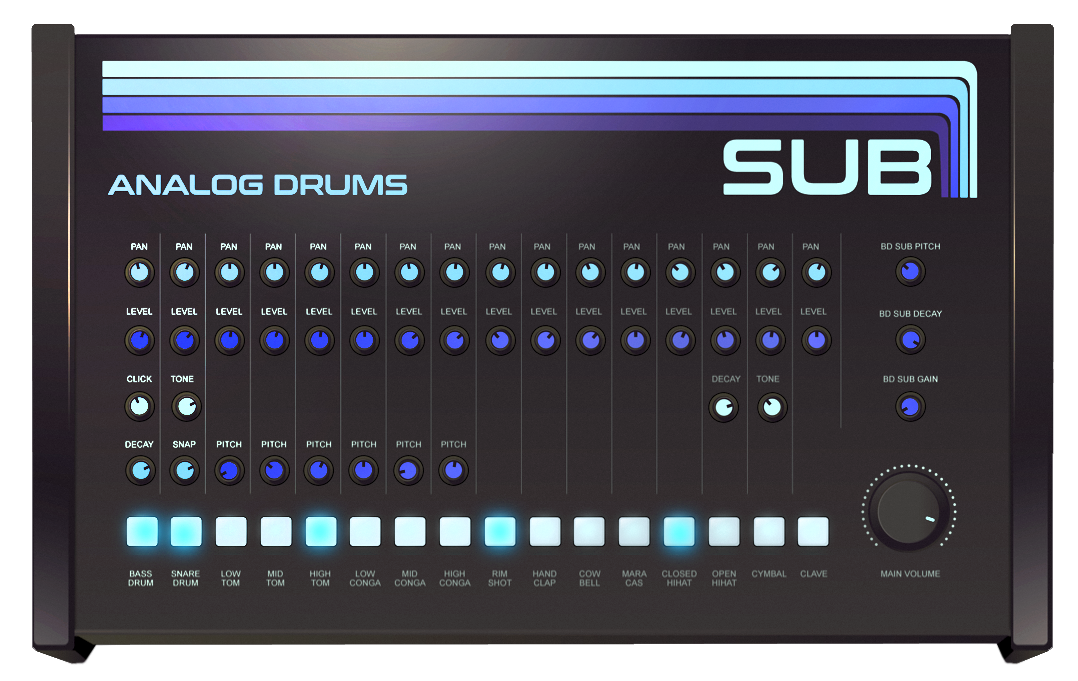
10. Sampleson SUB
Eighteen synthesized drum voices in a single rack panel, each with pitch, decay, pan and level, and nothing else: no sample playback, no sequencer, no effects. It is free, it runs as VST, AU and Standalone on macOS and Windows, and it loads in a moment.
Best for a producer whose DAW handles sequencing and who wants a compact analog-style source for nothing. The caveat is shallow editing: two synthesis parameters per voice, so no transient, noise-balance or envelope-shape control. Once you want a sound that is yours rather than the panel’s, you have outgrown it. Official SUB page
11. VCV Rack 2 (free edition)
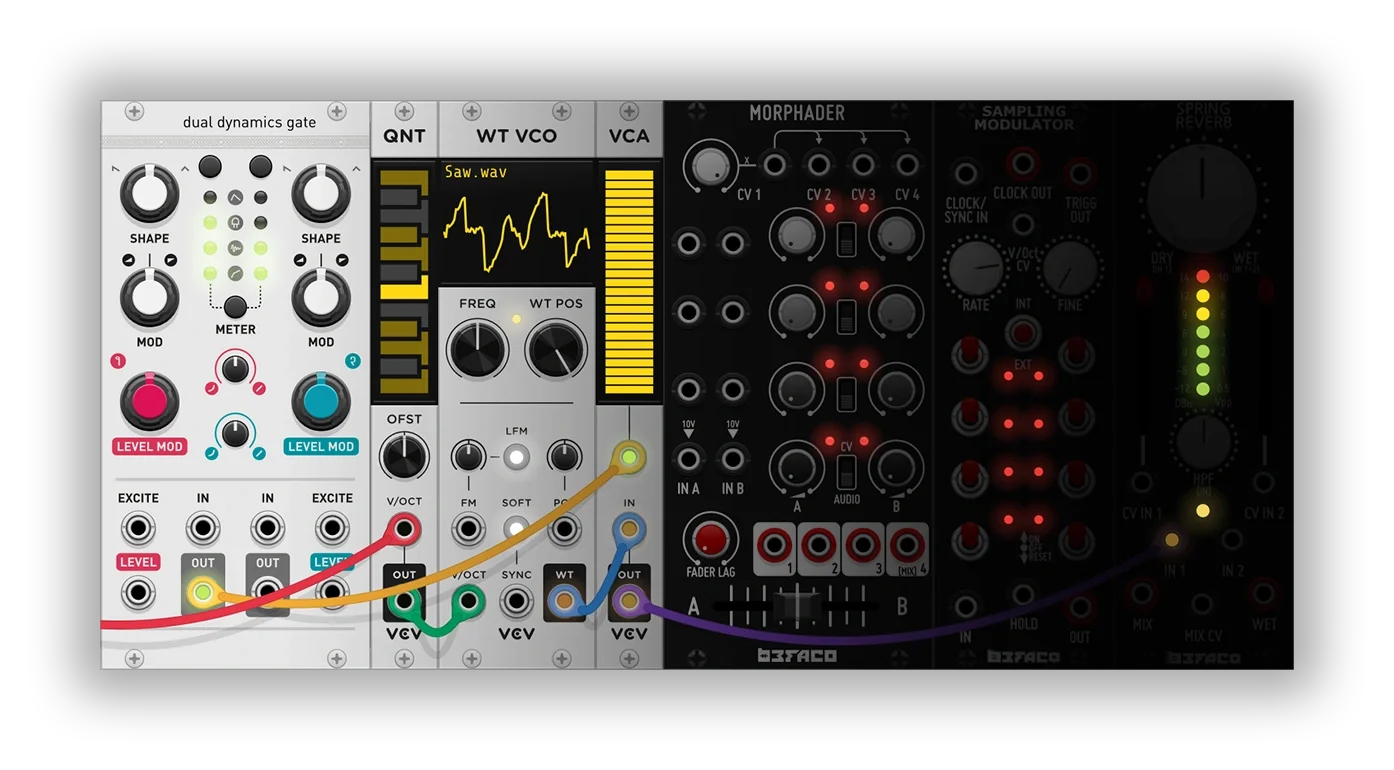
Not a drum synth but a free virtual Eurorack, and a route to some of the best drum synthesis available at any price. The free library includes dedicated drum voice modules — analog-style kick, snare and hat modules from several third-party developers, plus the FM, noise and envelope generators to build your own — and a sequencer to drive them. Patch a kick from a sine oscillator, a pitch envelope and a VCA and you have learnt more about drum synthesis than a year of presets teaches.
Best for the curious and for anyone who finds fixed drum-synth architectures limiting. The caveats are workflow: the free edition is standalone only, so audio reaches a DAW by routing or rendering, and the plugin version is the paid Pro edition. CPU use climbs fast with a full drum patch. VCV Rack
12. Surge XT
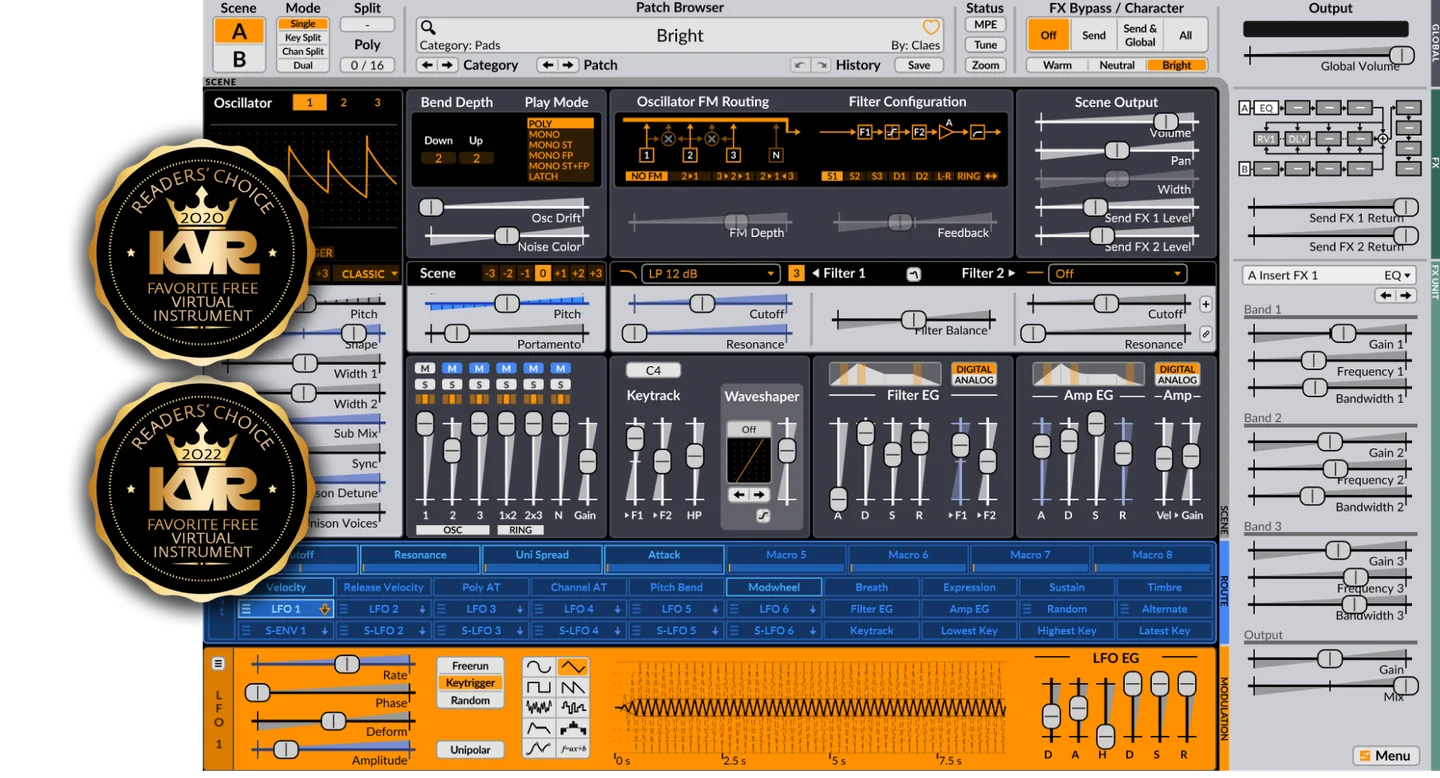
A free, open-source hybrid synthesizer with an unusually complete engine — wavetable, FM, classic and window oscillators, a modulation matrix, effects — and a factory library that includes a full section of percussion patches. Run one instance per drum, or use its multi-channel modes, and you have a drum synth that happens to be able to do everything else too.
Best for someone who wants one free plugin that can be a bass, a pad and a snare, and for FM-style metallic percussion the dedicated drum synths struggle with. The caveat is that it is not a drum instrument: no kit view, no per-drum outputs out of the box, and the drum presets are starting points. VST3, AU, CLAP and LV2 on macOS, Windows and Linux. Surge XT
Already in your DAW: Two DAWs bundle real drum synths. Ableton Live 12 Standard and Suite include the Drum Synths — DS Kick, DS Snare, DS Clap, DS Tom and others as Max for Live devices — and Logic Pro has included a Drum Synth instrument since 10.5. If you already own the DAW they cost nothing extra; try them before buying any of the above. MiniSpillage, a free three-model Audio Unit from AudioSpillage, is another Mac-only option.
Microtonic alternatives
People look for a Microtonic alternative for one of three reasons: they want deeper synthesis, they want a more modern interface, or they want the same idea for less money. For deeper synthesis without giving up the sequencer, Nepheton 2 or Drumazon 2 keep the write-inside-the-plugin workflow with far more circuit detail, at the cost of being tied to one machine each. For a modern kit designer with a wider palette, AIR Drum Synth 500 or Tekno cover more drum types and more synthesis methods, though both hand the sequencing back to the DAW. For free, Sampleson SUB is the closest thing to Microtonic’s compact simplicity, and VCV Rack is where you go when Microtonic’s two-source architecture is what feels limiting. Nothing here replaces the pattern-plus-synthesis speed that keeps Microtonic on lists two decades in.
Emergent Drums alternatives
Emergent Drums generates new drum samples with a machine-learning model rather than synthesizing them live, so an alternative depends on what drew you to it. If it was the idea of hits nobody else has, the closest thing on this list is real synthesis with an unusual architecture: UDS-16 (ours) is built on Soviet circuits no other plugin models, and DrumSpillage reaches noise and metal textures the mainstream kits do not. If it was the sheer volume of one-shots, a subscription-free route is to render them yourself from a synth you control — VCV Rack or Surge XT cost nothing — or to download our royalty-free free sample packs, which were produced with our own generator. What none of these give you is a button that invents a sample; what they give you instead is a sound that still changes after you have pressed it.
Drum synth, drum machine or sampler?
The three labels overlap in plugin stores, which makes comparison harder than it needs to be. The distinction comes down to two questions: who generates the sound, and who owns the timing.
Drum machine
A pattern sequencer bundled with sound sources, built to produce a finished groove in one window. Microtonic, the D16 pair and Spark 2 are drum machines. Many mix sample playback in alongside synthesis.
Drum synth
Each hit built from tone, noise, transient and envelope, usually leaving timing to the DAW. Drum Synth 500, KICK 2 and UDS-16 sit here. The absence of a sequencer says nothing about how deep the engine goes.
Sampler
Recordings replayed across pads or keys. Battery, XO and Sitala. The shortest route to one specific familiar drum and to acoustic realism; its limits appear where the recording resists being stretched or retuned.
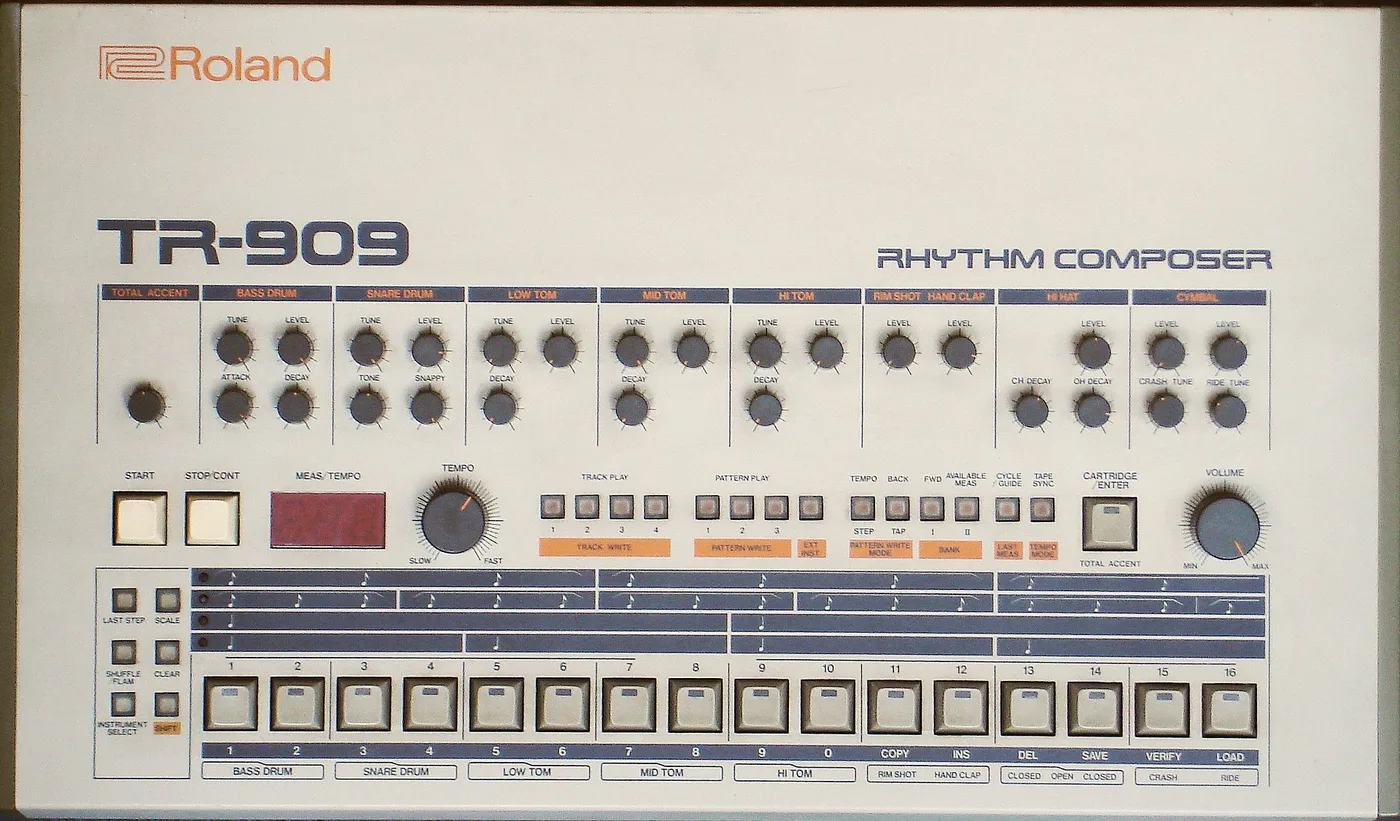

The practical test is ownership of the pattern. If you want sound design and beat programming in one place, shop the drum-machine shelf. If you already sequence in the DAW and only need a voice, a focused synth keeps the instrument layer small. Nothing stops you running both, and most working templates do.
UDS-16 head to head
Each entry above has a longer, two-instrument comparison with UDS-16, written to the same rule as this guide: the other plugin’s strengths named specifically, ours labelled as ours, nothing scored. Two more cover instruments that are not on this list but come up in the same decision — the drum synths bundled with Ableton Live, and Emergent Drums, which generates samples rather than synthesizing them.
- UDS-16 vs Microtonic
- UDS-16 vs AIR Drum Synth 500
- UDS-16 vs D16 Nepheton 2
- UDS-16 vs D16 Drumazon 2
- UDS-16 vs Arturia Spark 2
- UDS-16 vs Baby Audio Tekno
- UDS-16 vs DrumSpillage 2
- UDS-16 vs VSDS-X
- UDS-16 vs KICK 2
- UDS-16 vs Ableton Drum Synths
- Emergent Drums alternative: UDS-16 vs Emergent Drums
Frequently asked questions
What is the best drum VST plugin?
It depends on whether you want synthesis or samples. Among drum synths, Microtonic is the long-standing pick for writing patterns and designing sounds in one plugin, AIR Drum Synth 500 covers the widest range of synthesized drum types, and D16’s Nepheton 2 and Drumazon 2 are the most faithful 808 and 909 emulations. For acoustic realism or a specific famous sample, a sampler such as Battery or XO is the better tool.
What plugins should I use for drums?
Most producers run two layers: a sampler for the familiar, mix-ready hits, and a drum synth for the parts that need to move — a kick tuned to the key, a snare whose decay changes through the track, a signature percussion sound. One drum synth from this list, one sampler and a bus compressor cover most electronic drum work.
Can a synthesizer make drum sounds?
Yes. A kick is a sine or triangle oscillator with a fast pitch drop and a short amplitude envelope; a snare is a pitched tone plus filtered noise; a hat is filtered noise or detuned square waves with a very short envelope. Any subtractive or FM synth with fast envelopes can do these, which is why Surge XT and VCV Rack make the list. Dedicated drum synths pre-wire those relationships so you reach a drum in one step instead of ten.
What is the best drum synthesizer?
In hardware, the Roland TR-808 and TR-909 remain the reference points, which is why so many plugins emulate them. In software there is no single winner: Microtonic for compact drum-machine work, Drum Synth 500 for breadth, DrumSpillage for depth on a Mac, KICK 2 for the kick alone. UDS-16, which we make, is the only one modelling Soviet-era circuits. Decide the scope you need first — sequencer, kit or voice — and the field narrows to two or three.
Is there a free drum synth VST?
Yes. Sampleson SUB is a free eighteen-voice drum synth for macOS and Windows in VST, AU and Standalone. VCV Rack 2 is free as a standalone application and includes drum modules, though the plugin version is paid. Surge XT is a free, open-source synth with percussion patches. On a Mac, MiniSpillage is also free, and Ableton Live 12 Standard and Suite and Logic Pro each bundle drum synths.
Are drum synth plugins better than samples?
Neither is better. A sample is the faster route to a familiar drum or acoustic realism. Synthesis keeps pitch, decay and timbre connected as live parameters, so small changes create meaningful variation and the drum can evolve with the track. Most finished records layer the two.
Royalty-free WAV
Free sample packs
Royalty-free WAV, play every sample before you download.