
LinnDrum VST: Paid Libraries, Free Samples and DAW Options
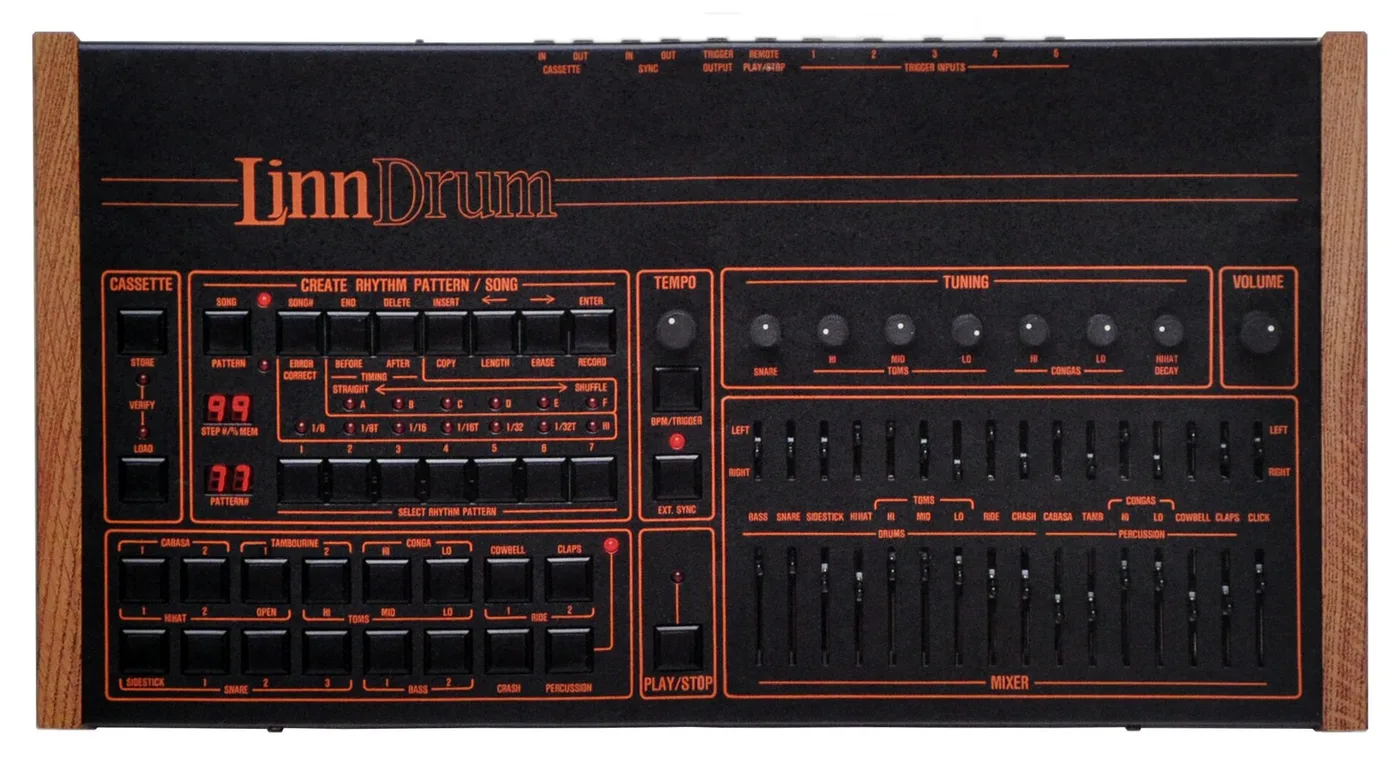
The LinnDrum is the drum sound of early-1980s pop: a dry, tight kit that was in fact a set of short digital recordings, played back with a swing that nobody had heard from a machine before. Getting it in a DAW is easier than getting an 808, because the original was already samples.
The short answer
A LinnDrum VST usually means a third-party instrument inspired by the original drum machines, or a sampled library loaded into a plugin player. A raw WAV pack needs your own sampler; a dedicated instrument such as IconDrum loads directly in your DAW. Check which workflow you are buying.
Because the LinnDrum was a digital sample-playback machine to begin with, a good sample set gets you almost all of the way there. The parts that need attention are the tuning, the swing and the mix treatment, and those are covered below.
Best Linn Drum VSTs and libraries at a glance
| Option | Type | Linn machines | Runs in | Best for |
|---|---|---|---|---|
| IconDrum (GForce) | Paid dedicated instrument | Linn-inspired sounds; third-party, not Roger Linn-endorsed | VST, VST3, AU, AAX or standalone, depending on OS | A direct plugin workflow with per-voice controls |
| Lindrum From Mars (Samples From Mars) | Sample pack | LinnDrum | WAV, plus kits for Ableton Live, Logic, Kontakt, Battery, FL Studio, Maschine, MPC and SFZ | Getting the specific sound loaded fast |
| Revolution (Wave Alchemy) | Multi-machine instrument, 14 machines | LinnDrum | Free Kontakt Player (VST, AU, AAX, standalone) | Several classic boxes with per-voice processing |
| BeatBox Anthology 2 (UVI) | Multi-machine library, 111 machines | Entries named after the LM-1, LinnDrum and Linn 9000 | Free UVI Workstation or Falcon | A large vintage library where the Linn is one sound of many |
| Stock DAW kit | Built-in kit | None by name; generic 80s kits | Ableton Live, Logic Pro, FL Studio | Sketching, when an exact match does not matter |
| Free MPC60 From Mars in a stock sampler | Free sample pack | Includes Linn samples processed through an MPC60; not a complete LinnDrum emulation | Any sampler | Zero budget; learning how the sound is built |
Which option should you start with?
- A dedicated plugin: GForce IconDrum includes 100 sounds, per-track pitch and decay, effects and separate outputs. GForce offers a seven-day trial. Its product page explicitly states that Roger Linn was not involved and does not endorse it.
- Specific LinnDrum sounds: Lindrum From Mars supplies WAV files and sampler kits. A sample pack is not a VST: load it in a sampler you already own. Check the included kit version against your DAW before buying.
- An instrument with sequencing and several machines: compare Wave Alchemy Revolution and UVI BeatBox Anthology 2. Both are paid libraries with a host/player workflow. Verify current OS, plugin-format and player requirements on the product page.
- No purchase yet: Free MPC60 From Mars includes Linn and other drum samples through an MPC60. It is useful for building a small kit in your stock sampler; it does not reproduce the full LinnDrum panel or tuning system.
- A finished retro rhythm: audition Tapechild’s 40 free 80s drum loops. These are AI-generated, period-inspired patterns, not sampled LinnDrum hardware. Preview freely; an email is required for download.
For the first test, program the same kick, snare and hi-hat pattern in each option, bypass the effects and compare at similar loudness. Then test tuning, swing and a short gated reverb in your song. That separates the source sound from the production around it.
What the LinnDrum actually was

The Linn LM-1 Drum Computer (1980), designed by Roger Linn, was the first drum machine to play digital samples of real drums instead of synthesizing them, and it made programmable swing part of the instrument. The LinnDrum (1982) was the cheaper, mass-produced follow-up: the same sampled approach and swing, with crash and ride cymbals added. It is the machine most people mean by “Linn drums”, and the one most plugins sample.
This page stays with the software. The full story, from the LM-1 to the Linn 9000, is in our history of the Linn drum machines.
One point worth being clear on: the LinnDrum is a digital instrument. The samples are low-resolution by modern standards, which is part of the character, but they are recordings, and a knob on the front panel changes playback rather than a circuit. That puts it in the opposite column from the Roland TR-808 in our guide to analog drum machines.
| Linn LM-1 (1980) | LinnDrum (1982) | |
|---|---|---|
| Sound source | Digital samples of real drums | Digital samples of real drums |
| Cymbals | None | Crash and ride added |
| Tuning | Every voice individually tunable | Tuning on a subset of voices (snare, toms, congas, hi-hat) |
| Swing | Programmable shuffle | Programmable shuffle |
| Production | Hand-built in small numbers, very expensive | Mass-produced, considerably cheaper |
| Typical association | Prince, The Human League | a-ha and mid-80s pop generally |
Songs with the LinnDrum sound
The list is limited to records where the Linn machine is well documented. Plenty of other mid-80s pop used one, but attribution gets loose quickly.
- Prince — “1999” and “When Doves Cry”. Prince was one of the earliest LM-1 owners and used it, heavily processed and often pitched, across his early-80s records. “When Doves Cry” is the LM-1 with no bass part at all.
- The Human League — “Don’t You Want Me”. The Dare album was built on the LM-1, and this track is the cleanest example of the dry, clipped kit that defined synth-pop drums.
- a-ha — “Take On Me”. The LinnDrum provides the drum track under the synth riff, with the tight, bright snare that most people picture when they think of the machine.
What the records share is not just the samples: a very dry drum mix, a snare that is often tuned down, and a swing setting that keeps the groove from sounding quantized. Those three things are what to reproduce.
LinnDrum plugins and emulations
Since the original played samples, the best software versions are also samples, recorded from working machines and often at several tuning positions. The list is limited to products we are confident exist at the time of writing; check each maker’s page for current formats and pricing.
Samples From Mars — Lindrum From Mars
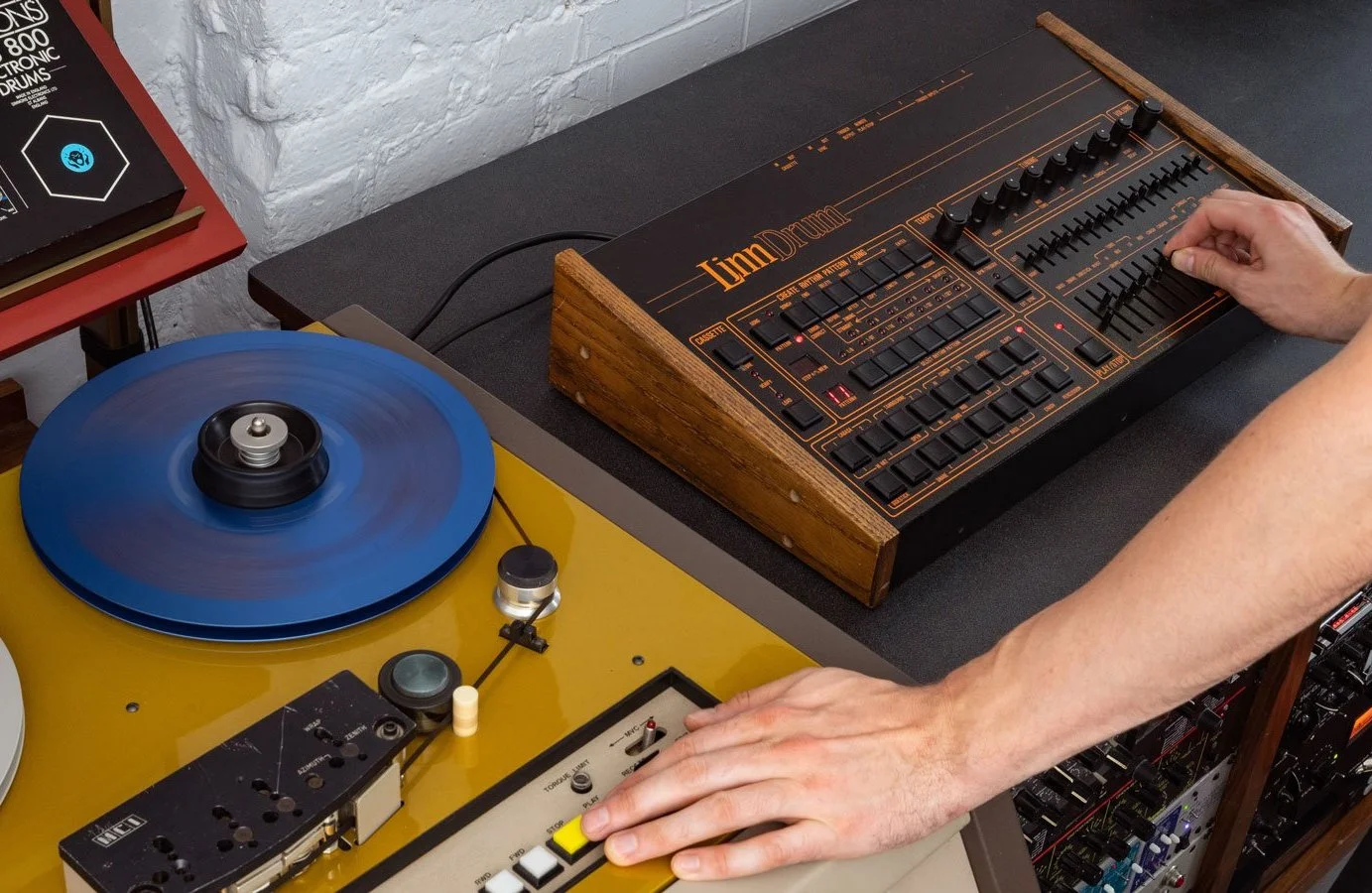
Samples From Mars specialises in multisampling vintage drum machines through analog outboard, and their Lindrum set (their spelling) covers the machine in 1,380 24-bit samples, clean and processed, with kits pre-built for most major samplers and DAWs and groove templates that copy the LinnDrum’s quantize and shuffle. It was under $50 at the time of writing. This is the closest thing to a standard answer for producers who just want the sound loaded and ready.
Wave Alchemy — Revolution
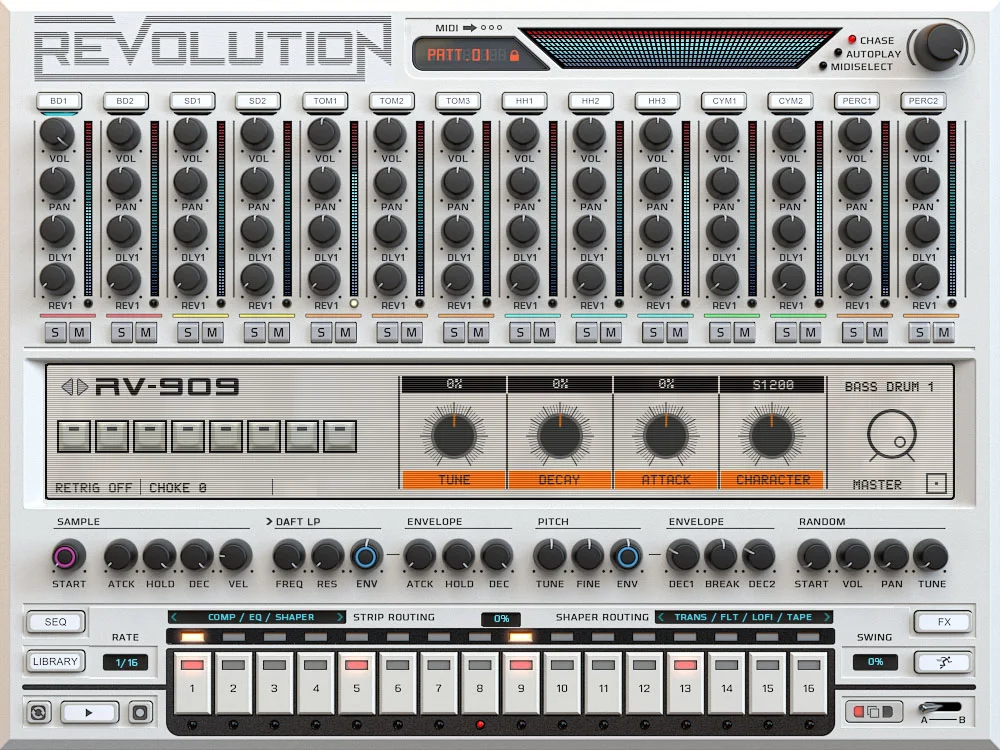
Revolution is a multi-machine drum instrument built on deep sampling of classic hardware, including the LinnDrum, with per-voice tuning and processing. It runs in Native Instruments’ free Kontakt Player, so the full Kontakt is not required. It is heavier than a straight sample pack and suits people who want several classic boxes in one instrument.
UVI — BeatBox Anthology 2
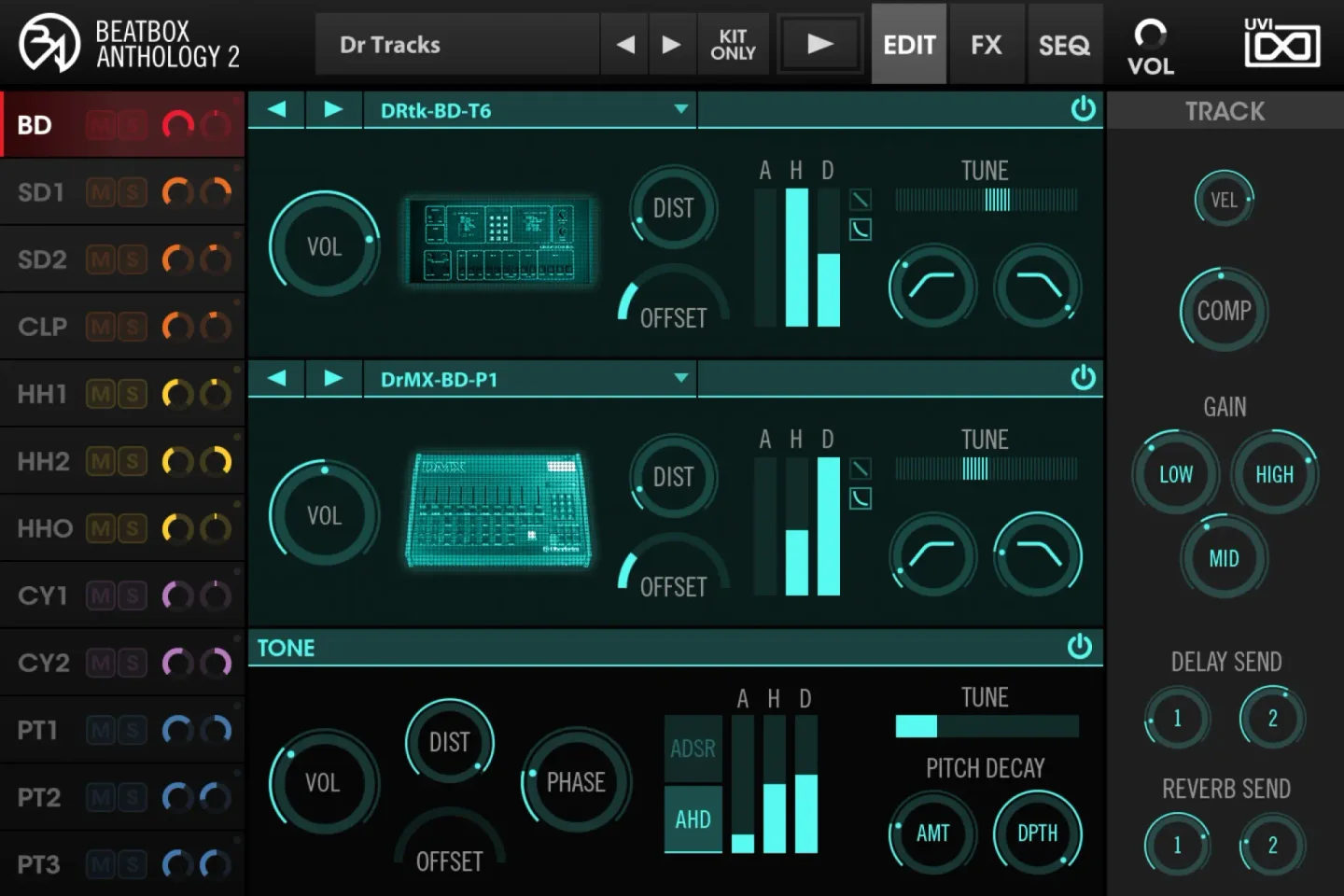
UVI’s BeatBox Anthology 2 collects a large number of vintage drum machines into one plugin, and the Linn machines are among them, under abbreviated names that point to the LM-1, the LinnDrum and the Linn 9000. It runs in UVI’s free Workstation or in Falcon. It is the right choice if the LinnDrum is one of many sounds you want rather than the only one.
DAW-native kits
Ableton Live, Logic Pro and FL Studio all ship stock kits modelled after classic machines of this era. The naming is usually generic for trademark reasons, so look for kits described as 80s, retro or electronic pop. And a set of LinnDrum samples loaded into the stock drum sampler in any of these DAWs is functionally a LinnDrum plugin.
Free LinnDrum samples and VSTs
Free LinnDrum sample sets have circulated for many years. Quality ranges from clean, well-recorded kits to worn copies with noise and clipping, and licensing is often unclear, so read whatever terms come with a set before using it on a commercial release.
A free “LinnDrum VST” is almost always one of those sample sets wrapped in a simple sample player. The plugin adds convenience, not sound. Your DAW’s stock sampler and a decent free set give the same result.
Getting the 80s drum machine sound without a LinnDrum
The samples are only half of the sound. The mix is the other half, and it is easier to reproduce than the machine.
- Keep the kit dry and close. Early Linn records have almost no room on the kick and hats. Do not add ambience to the whole kit; add it to the snare only.
- Tune the snare down. A LinnDrum snare pitched down a few semitones is a large part of the Prince and Human League sound. Most samplers do this in one control.
- Use swing, not a grid. Set a 16th-note swing between roughly 55% and 62% in your DAW. A perfectly quantized LinnDrum pattern sounds wrong because the original machines almost never ran that way.
- Gate the snare reverb. The big 80s snare is a reverb cut short by a gate. Our gated reverb guide has the settings and step-by-step recipes for Ableton, Logic and FL Studio.
- Start from a finished loop if you are sketching. The 80s and 90s pop drum loops pack on our site is royalty-free WAV, rendered in this style, and free to download.
Tapechild UDS-16: a synthesized alternative
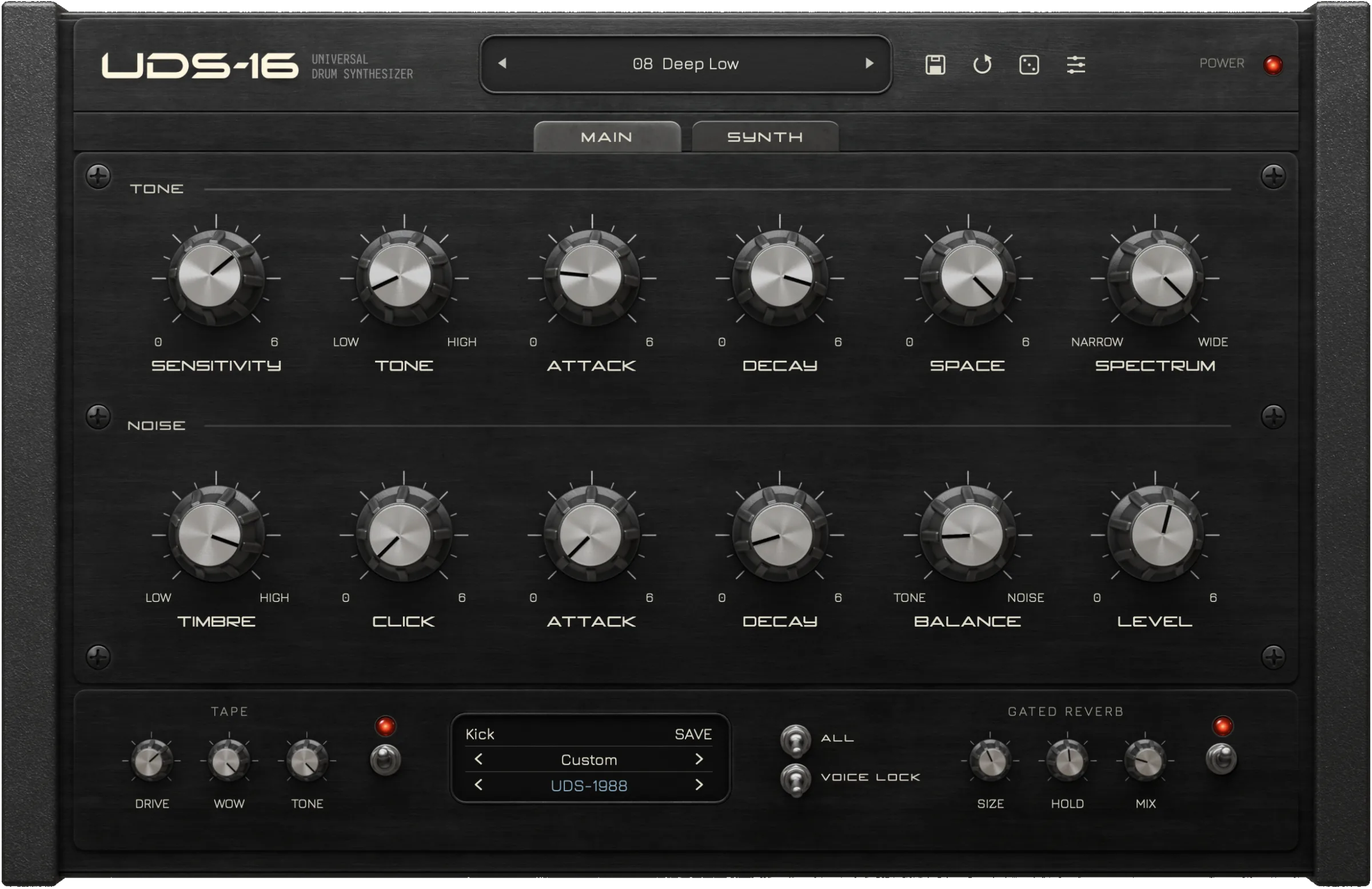
This section is about our own product. UDS-16 is not a LinnDrum emulation and does not contain LinnDrum samples; it contains no samples at all. Every hit is synthesized at playback, using circuit models of two Soviet 1980s machines, the Lel UDS and the Formanta Rockton, which we cover in our guide to Soviet drum machines.
That makes it the opposite approach to the Linn: electronic percussion from the same decade, but generated rather than recorded, so pitch, decay and noise are live controls rather than fixed properties of a sample. It has a built-in gated reverb and no step sequencer; timing comes from your DAW. If you want 80s drums that sound like a real kit, use a LinnDrum library. If you want 80s drums that sound like a synthesizer, this is what it is for.
Frequently asked questions
Is the LinnDrum analog or digital?
Digital. The LinnDrum and the earlier LM-1 store short digital recordings of real drums in memory and play them back from a step sequencer. The tuning knobs change the playback rate of the sample, not a circuit. That is what separates it from analog machines such as the Roland TR-808, where every sound is generated by circuitry.
Is there a free LinnDrum VST?
Free LinnDrum sample sets are widely available, and most free “LinnDrum VSTs” are those samples inside a simple sample player. Loading a free set into your DAW’s stock sampler gives the same result. Quality and licensing of free sets vary, so check both before using one on a commercial release.
What is the difference between the LM-1 and the LinnDrum?
The LM-1 (1980) was the original, hand-built in small numbers, very expensive, with no cymbals and individual tuning on every voice. The LinnDrum (1982) was the cheaper, mass-produced successor that added crash and ride cymbals and limited tuning to some voices. Both use digital samples of real drums and both have programmable swing.
What songs used the LinnDrum?
Well-documented examples include Prince’s “1999” and “When Doves Cry” (LM-1), The Human League’s “Don’t You Want Me” (LM-1) and a-ha’s “Take On Me” (LinnDrum). Linn machines were used across a large amount of early and mid-80s pop, but attribution for many records is less certain than for these.
Does the LinnDrum have a step sequencer?
Yes. Both the LM-1 and the LinnDrum have a built-in pattern sequencer with real-time and step entry, programmable swing and song chaining. In a DAW you can reproduce the feel by applying a 16th-note swing of roughly 55–62% to a drum pattern built from LinnDrum samples.
Royalty-free WAV
Free sample packs
Royalty-free WAV, play every sample before you download.